Top 6 Hot Springs soaks in Colorado

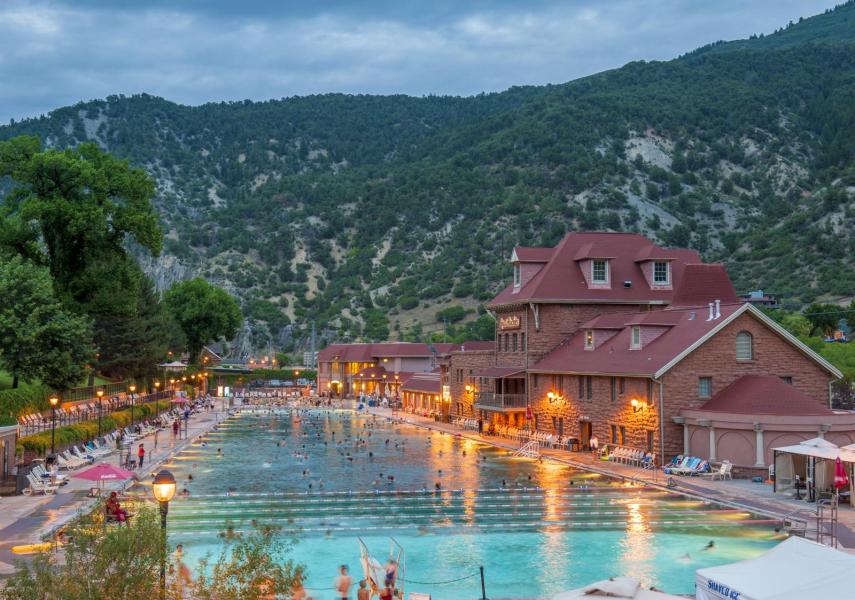
Photo by Glenwood Hot Springs Resort

Glenwood Springs was first. The strong smell of sulfur and the scratch of concrete on our bare feet. I think it may be more bougie now, but it is still hot. I remember thinking that the first pool was so hot it may have literally touched the earth’s core. My young siblings and I dared each other to jump in, or even to dip a toe, before we headed to the milder, larger warm pool that seemed to go on forever. Apparently its the largest hot springs pool in the world!

“I can still touch here,” we would exclaim to one another and to our parents, as we bobbed along all the way to the deep end, its diving boards, and an inevitable sunburn in the high-altitude swim.

My young husband and I ended up back in Glenwood again for our honeymoon. It was unexpected, a sort of punt after the cruise line we’d booked went bankrupt. We kept returning wedding gifts at the Glenwood Walmart to extend our stay at the honeymoon suite at the Silver Spruce Inn and then cheaper Starlight Lodge. A set of six glass tumblers and some mixing bowls afforded us a few more days of hiking, soaking, and fine dining at the Village Inn. I think couples plan more today and have more money. But are they the happier for it? Debatable.

We were married in late December, and if you’ve never been in a Colorado hot springs in winter, know this: it’s magic. Pillows of steam rise from the water, wrapping swimmers in mystery and privacy as they glide through the warm, mineral-rich pool. Pure joy.

Three years later, we landed in Norwood, Colorado, not far from Ouray, another hot springs haven. We’d often drive the hour to soak in the mineral baths while our preschool daughter swam circles around us. We’d lean back, relax, and scan the red cliffs for mountain goats.
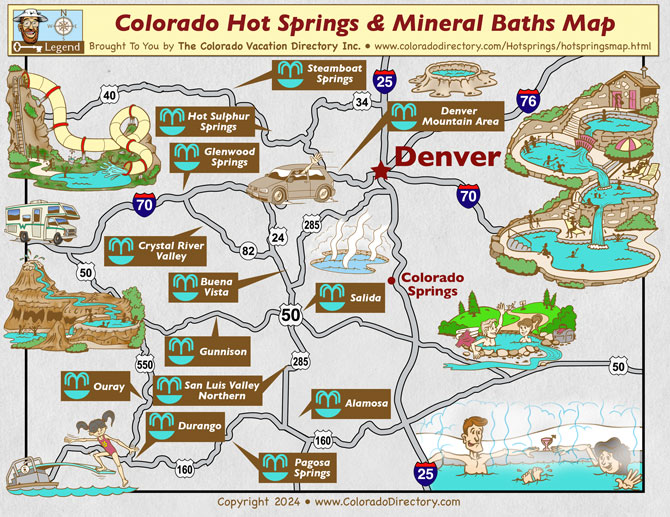

Colorado Hot Springs Map

Another daughter later and we headed again to Glenwood, and then more regularly down from Grandma and Grandpa’s place in the center of the state to Mt. Princeton Hot Springs near Buena Vista. They had a frequent swimmer punch card!

At that time, Mt. Princeton wasn’t much—just a cave-like reception area, a basic rectangular pool, and a path down to Chalk Creek, where the real magic happened. Hot water bubbles up beneath the sandy creek bed, and visitors build rock pools right in the stream, mixing hot and cold flows to find the perfect soak. The kids loved experimenting, damming one side, letting cold water in the other. It’s a little more fancy now, and definitely much more expensive, but the creek is still the best part.

In more recent years, we’ve added new springs to our travelogue. Pagosa Springs, near Durango, charmed us with its location right in town but somehow still holding onto a nature vibe. Strawberry Hot Springs, near Steamboat, delivered an entirely different experience—hippie vibes, clothing optional after dark, and a sketchy unisex changing room with raggedy curtains. After a day of skiing we braved the snowy stairs on prickly bare feet to sink into the steamy and crowded, but warm and lovely pools.
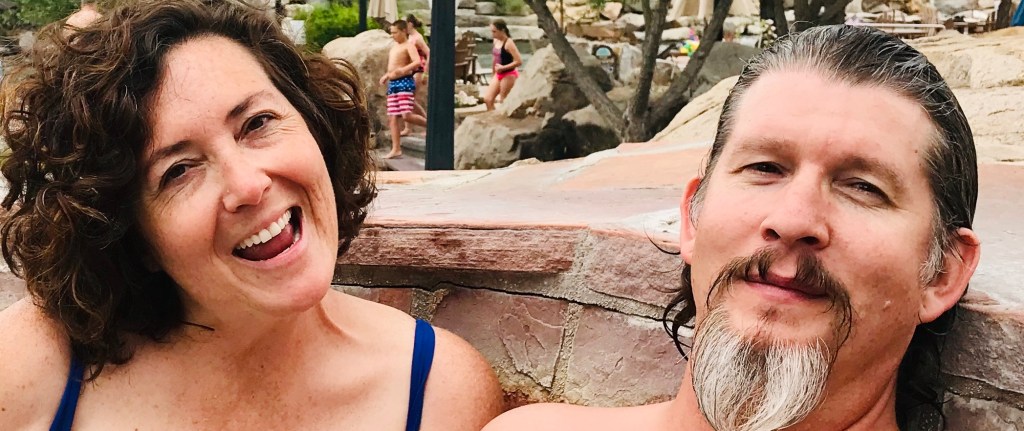
Me and the Hubs at Pagosa Springs, Colorado, in 2019.

Our favorite hot spring discovery lately is the redeveloped Iron Mountain Hot Springs, the second major spring in Glenwood. It features over a dozen small pools made of red rock, sand, and pebbles, blending into the high desert aesthetic and offering unique temperatures marked with metal signage. Regular adjustments with cool Colorado River water offset the natural 112°F heat.

The best part? Choice. Want to stay in a toasty 105°F? Done. Prefer a milder 99°F? Just down the walkway. My personal favorite is 103°F. Every body is different.

Some pools are close enough to hear the river; others let you sit and watch it flow by. Bathers soak surrounded by foothills, eagles—and the glow of lights from the big box stores across the water.

We still have plenty of hot springs left to try. So when we find our next favorite soak—I’ll be sure to let you know.

###

Art for joy’s sake

Some art is created to dissolve.

Ice sculptures. Sandcastles. Chalk paintings on pavement. Ron and I walked around the Denver Chalk Art Festival this year and glimpsed some wildly colorful works chalked onto the streets. The bold palettes seemed to take their cues from tattoos, or street murals. And, despite the fact that the artists were painting down on the ground, many managed to add enlivening dimensions to their asphalt canvases.

The frog’s classic dilemma.

Chalk artistry is one of the most optimistic and free expressions of art. Hours are spent drawing, shading, and adding detail, all for the sake of a creation that disappears within days, maybe hours if it rains. Transient art reminds us that everything will pass. Maybe that’s also why I blog.

Bright butterflies take flight from three-dimensional bricks chalked on the street.

Some art wants you to feel something.

Set in the same Denver block as the chalk art festival is the Clyfford Still Museum. I stepped inside this ultra-modern edifice on one of its free days a few weeks ago. It was built specifically to house nearly all the paintings by American artist Clyfford Still (1904-1980).

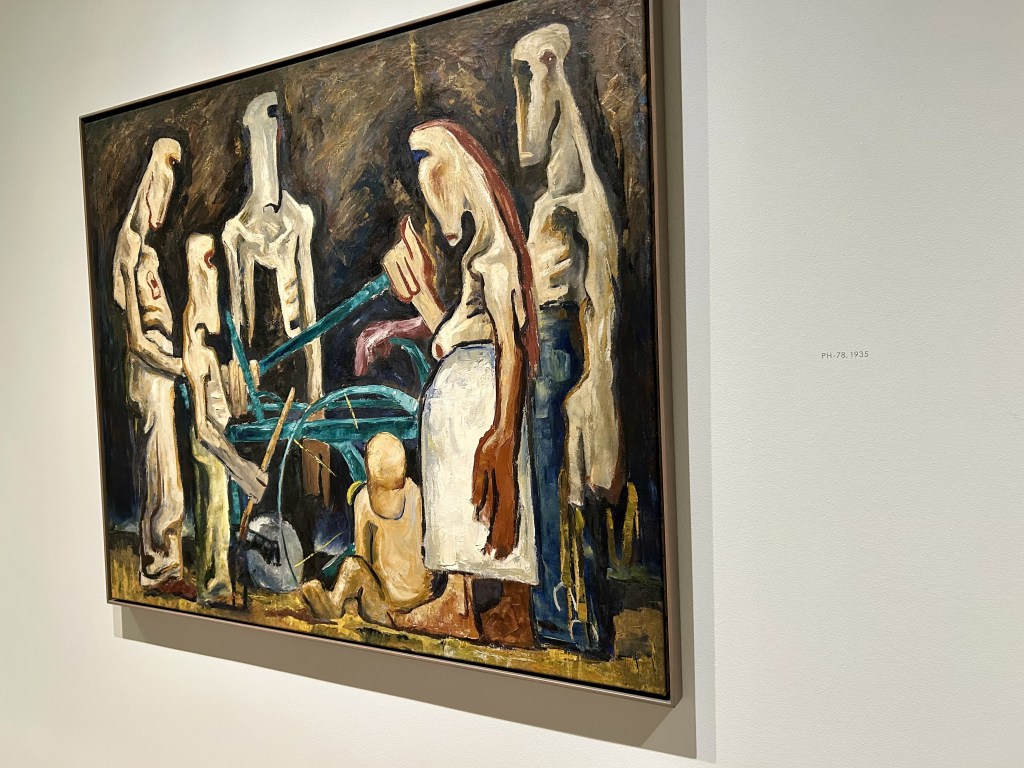
These are Clyfford Still’s horse-face people.

Arranged to show Still’s journey as an artist, the exhibit began with works from The Great Depression era. Still painted horse-faced people whose skin drapes thick over their protruding bones, hands dangling like oars at their sides. Following World War II, Still became an abstract expressionist of the 1950s. He was counted along with Jackson Pollock and Mark Rothko, and a dozen others in this movement.

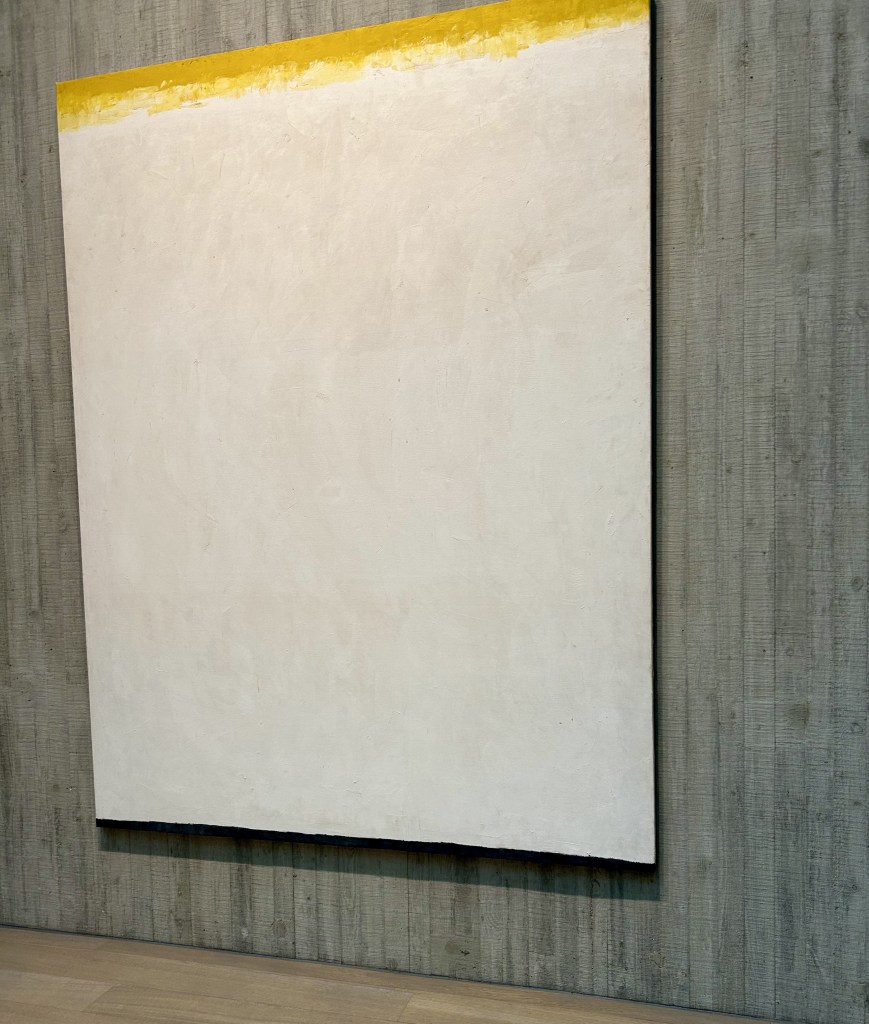
What is the feeling elicited from a massive white square bounded at the top with a blurred gold? Heaven? Ennui? Or perhaps the happy emotion of something being clean and uncluttered.

Still used enormous canvases. He was right doing that, I think. Feelings can be big. He painted giant swaths of one or two colors. He used jagged shapes, blocks, and lines. I like the horse-face people better. Abstract art has never compelled me. That doesn’t say as much about abstract art as it says about me.

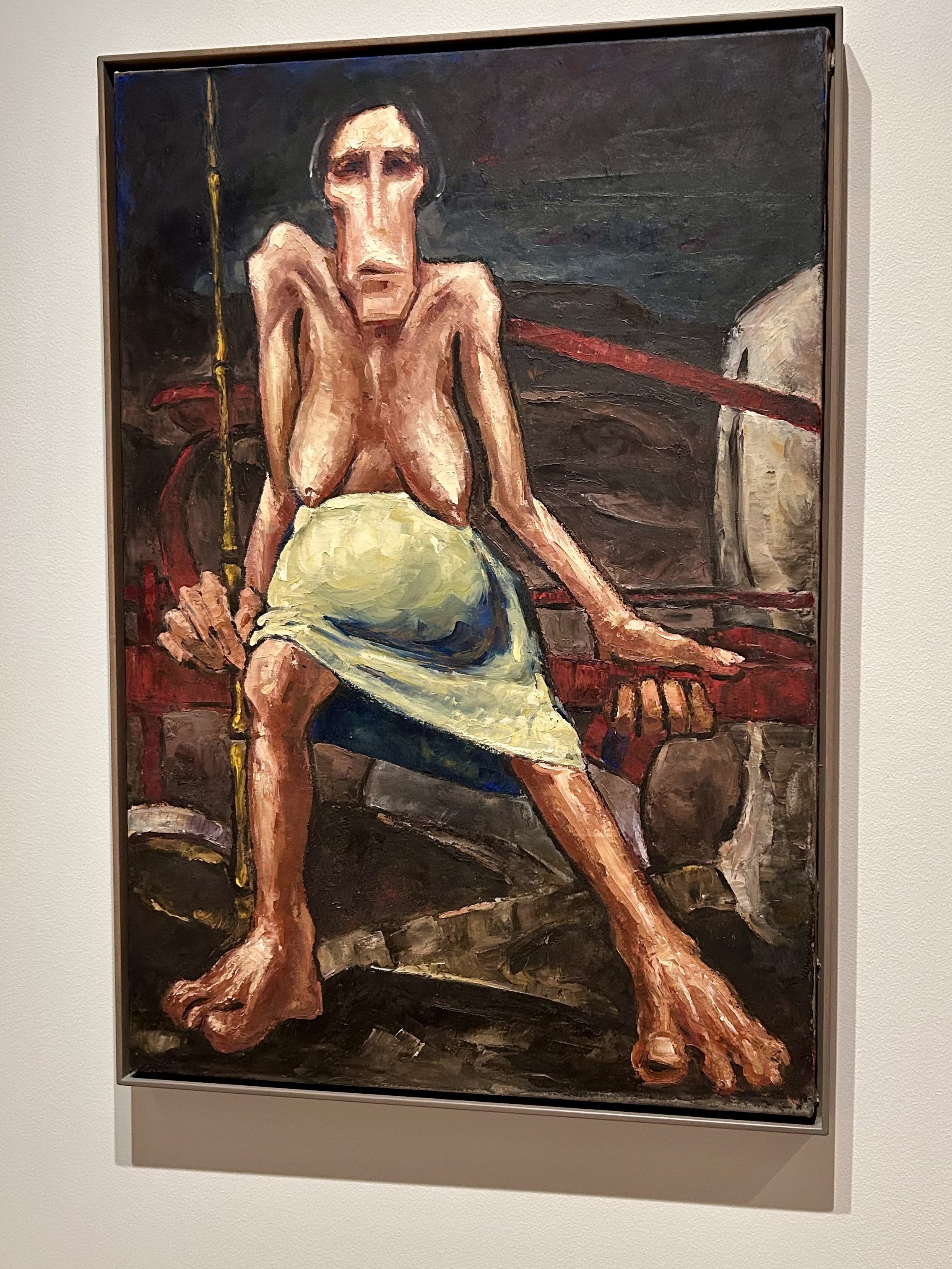
I related to the woman Still painted who seemed to me to embody the stage of life in which I now find myself; mid-50s, empty nest. Still’s work, PH 416 was like staring into a mirror. The woman sits shirtless for no apparent reason, large breasts hanging down slack and uneven, nipples shelved on a rounded lower belly bulging beneath a green skirt. She’s holding what appears to be a bamboo pole in one massive paw. Her face is long, like the others, and blank; emotionless. Here large toes, feet, and hands no match for her gaunt body, painted sinewy with deep contrasts. 

I am her, I think, as I gaze at the painting.

Then, I imagine Still tiring of this woman, and all the long faces. I consider the steps he took from these works to abstract painting. I try to make sense of his interest in art that would provoke emotion in viewers, rather than reveal it in those he painted.

Some art is found.

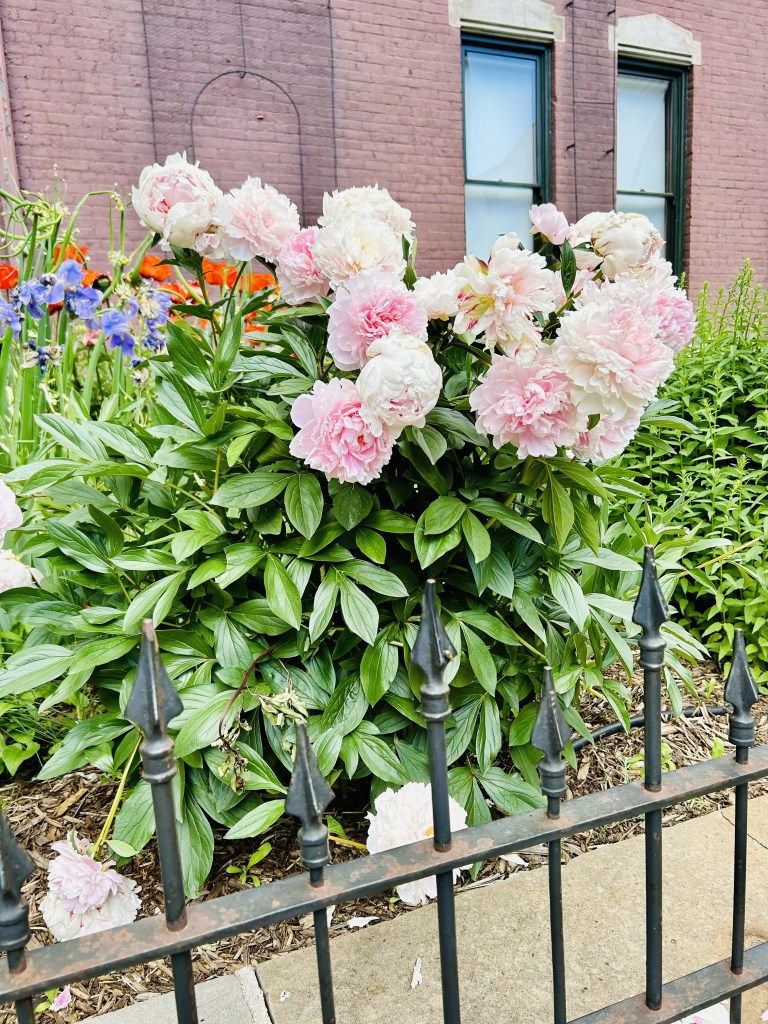
I wandered back to the bus stop, still thinking about the Still Museum paintings and stopped to notice the bright red poppies, and pale pink peonies guarded by a wrought iron fence at the Center for Colorado Women’s History. Maybe flowers are art. Maybe drawing or painting them is art. Do they convey emotion? Do they elicit it?

I’ve been reading The Supper of the Lamb: A Culinary Reflection by Robert Farrar Capon, and it’s a treasure trove of practical theology. Art and theology are as close as siblings I think, since God is a creator, and we are made in his image. Capon broadens the idea of art for art’s sake to encompass more than art. So, I think food, flowers, paintings, chalk or otherwise, abstract or representational, everything that has been made would be included in what Capon says exists simply for joy.

“The world exists, not for what it means but for what it is.” – Robert Farrar Capon

###

Last bike ride: a study in contrast

The bike path near our condo used to be the best feature of the area where we live near Old Town Littleton, Colorado. Maybe it still is, I can’t decide. 

The trail winds its way along Big Dry Creek for miles, then follows the South Platte River. A cyclist can ride all the way into Denver if you don’t mind the smell of pot, and occasional drug addicts ambling along. 

Go the other way and you’ll end up atop the Chatfield Reservoir Dam, winded and perhaps wishing you had driven, but awestruck by the purple mountain majesty and the sparkle of sun on the wide water. 

Sometimes I also take the bike trail from here all the way to the Highline Canal trail, which winds through the back of neighborhoods filled with mansions, manicured lawns, stables, and pools.

Either way, I see things.

Maybe that’s because I cycle like I walk — slowly. I guess you could say I’m going nowhere, fast, and that’s true in more ways than one, since I’m no longer working, and we don’t have any big travel plans this summer. But the slow pedaling keeps me humble. When I’m bicycling on the path I hear “on your left,” so frequently, even from skinny octogenarians who pass me at incredible rates of speed for their old bones, that I sometimes wonder if I’ve accidentally stopped altogether. 

Of course, when biking in Colorado, it’s important to remember that a lot of cyclists on the bike paths here are like a lot of hikers on the trails here—super serious. Me, not so much. My bike is old and crappy. I got it for 40 bucks on Facebook Marketplace. I don’t wear Lycra. I have no real cycling gear other than my helmet. I like a wicker basket between my handlebars so I can take home things like the vintage greeting cards I found at the thrift store on 50% off white tag day, or so I can bring along an apple to eat. I don’t have clip-in shoes. I wear worn sandals. I wear shorts and blouses, and cruise along at a speed that makes my heart pump faster but doesn’t endanger passing geese or have me accidentally ingesting the fluff floating in the air this time of year from the enormous Cottonwood trees. 

And I see things.

On weekends the path is very busy. There are a couple of beer pubs, a winery, and a coffee shop where a fiddler and a couple other string players sent music notes drifting through the breeze toward the river the day I passed by. The library bookmobile was parked there, too, I noted it, so I could check books out next time. That was when I thought there would be a next time.

I stumbled into the Paris Flea Market event at the Aspen Grove shopping center last Saturday. Reminded me of the actual Paris flea market Ron and I went to when we were in Paris several years ago. We bought some vintage tourist brochures with renderings of old chateaus. I framed a few and hung them. Of course, the Colorado version of the Paris market included lots of very American things, like tie-dye, country chic décor, and overpriced food trucks. I ate the apple I’d packed in my basket.

Then I road back the same way I had come and watched the river flow along, its deep water quiet and calm, flanked by lush willows and primrose bushes. I saw two dogs in backpacks, tongues hanging out, fur flowing in the breeze as they rode along with their cycling owners.

I only passed one other cyclist – he was pedaling a large cart like a rickshaw. It held two older, possibly disabled people. The sign on the cart said something about making cycling accessible. I actually thought at that moment that maybe I could help do that as well by writing about this path for people who could never bike along it. I didn’t think that would ever include me. 

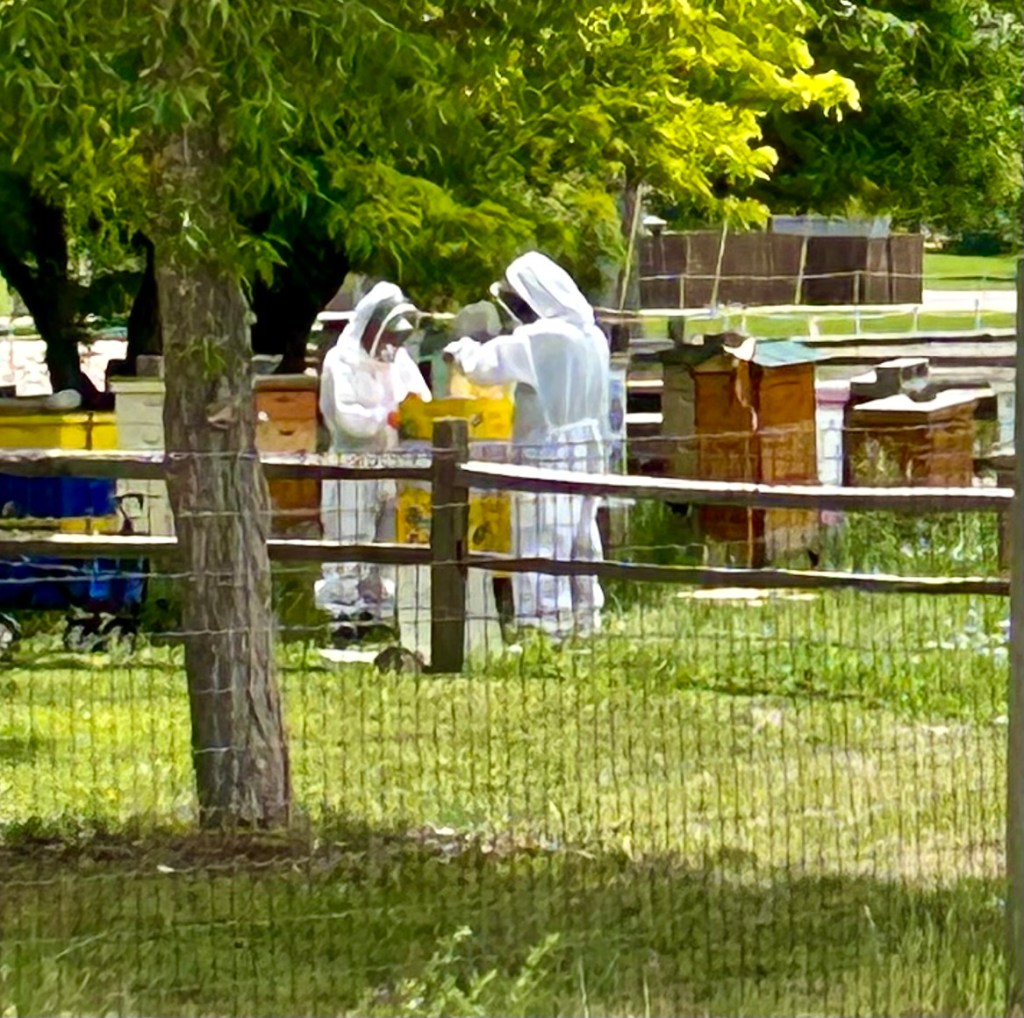
I saw beekeepers at the Hudson Gardens. 

I saw the 154-foot SpaceX rocket booster that arrived at its new home outside of the DISH Network Corporate Offices in Littleton last year. It was impressive! I’ve never found a tax deduction that large. Neither have I ever earned even a fraction of what the Dish chairman has lost. This is a guy who started by selling satellite dishes out of his car in the 1980s before his net worth literally skyrocketed to well over $20 billion a few years ago, according to Forbes. Sadly, he free fell back to earth with a mere $1.4 billion this year. But then, the economy of late has made most of us losers.

Not far from DISH are the benches where men hang out and sometimes build fires, or camp. They may be some of the 600 or so folks DISH has laid off in the last couple of years. I hope not, but as the latest innovation even at DISH illustrates, namely that of the no-dish satellite. No one wants a dish, or a cable anymore I suppose. We want our entertainment coming to our screens from nearly invisible sources, just like it did in the good old days of radio and antennae television. 

I pedaled under a couple more bridges and I was back along the creek. I pedaled past the dog park where a man frequently brings his Mexican wolf. To the dog park. He is the alpha male, obviously—the wolf, not the man.

Toward the end of my ride, I climbed up the hill to the place where a green miniature train follows a track around Belleview Park. Families lay out blankets and picnic along the wide, grassy banks of the creek there while their children wade into the water and squeal. None of them seem to have any idea that only a few months ago the former mini-train conductor was indicted for some sort of cottage-industry mortuary that turned foul; READ: corpses rotting in his hearse and cremations backlogged. (Fiction is less interesting than real life these days.)

I zoomed through the last tunnel. It’s off-and-on strewn with graffiti and then painted over in patches. I rattled across the final wood-planked bridge, and I was back within view of our condo. A birthday party for a three-year-old was just finishing. I braked for kids carrying balloons and packages to the parking lot then panted my way up the last hill to check my mail. I spotted the pickup truck where a woman sometimes lives.

I saw all those things. And I thought I would go on seeing them all summer on those trails. But today I walked by the bike rack on my way to the mail again, and our bikes were gone. The lock cable had been snipped like a string.

###
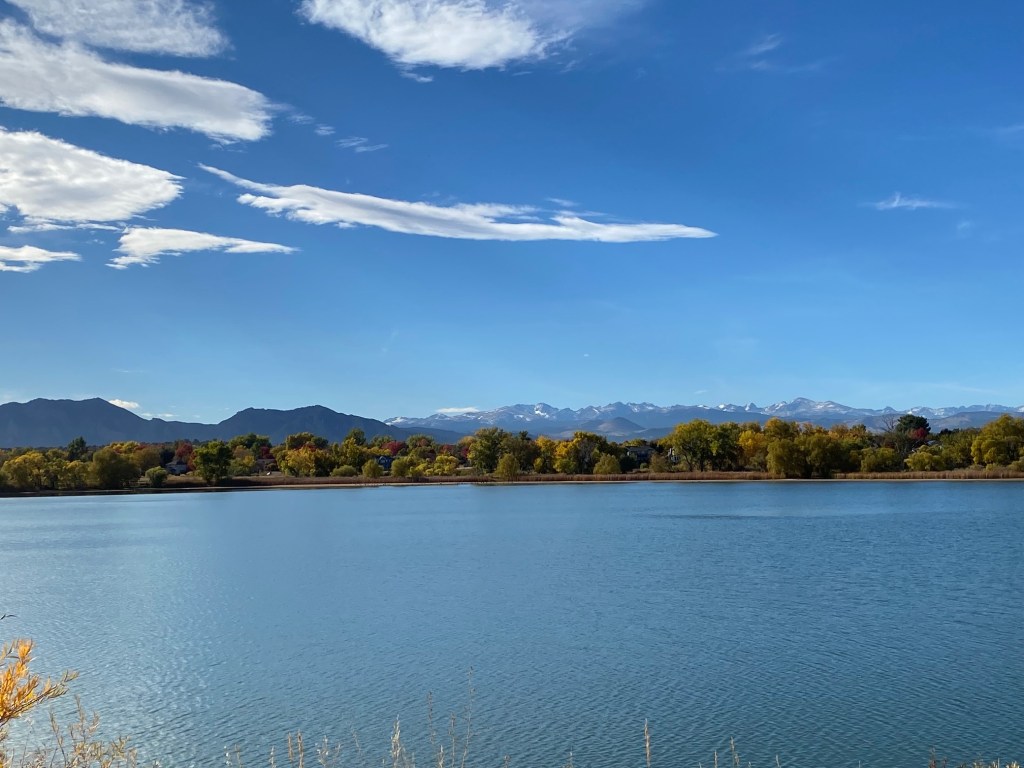
Spoiled in Colorado

Last week we rode up the chairlift at Vail with a couple who said they were from Tahiti. Tahiti! That’s almost 5,000 miles across a tropical ocean from the Rocky Mountains of Colorado. It was certainly the farthest flung origin I’d ever heard about, even at Vail, an international enclave. We’ve met people there from Mexico, Germany, Portugal, and elsewhere. Though Tahiti was a new one. I forget sometimes what a huge draw winters in Colorado are for people who live elsewhere. We get dumps of snow off and on, but we also get regular days of sun that quickly melt it all away. In fact, today, late February, I’m sitting outside in the sun writing this. It’s in the 60s and with the sun it feels warm enough for just a T-shirt and jeans.

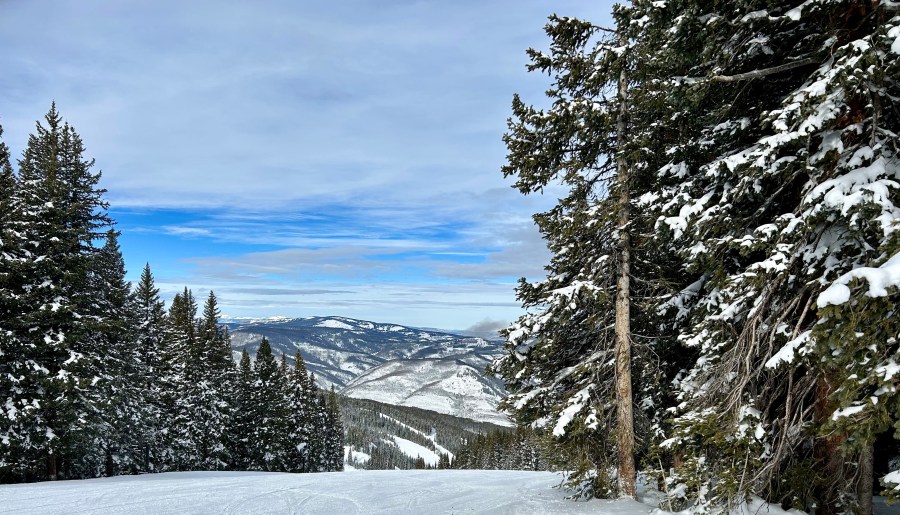
We have ski passes again this year. If we buy them early enough and ski often enough the price works out to be about a third less than a lift ticket. And the more we ski the cheaper it is. Though Vail does charge about $30 this year just to park the car. So, there’s that. As prices have risen and ski resorts have been apparently catering more and more to out-of-state skiers who come for days or weeks, we have been forced to get a little more creative in how we ski, just to be able to afford it. We have a few cheat codes.

First, we ski mid-week when we can. It’s not cheaper, but it’s more fun. A Tuesday or Wednesday is far less crowded, which means a smoother and faster drive up the mountain, less time in lift lines, and fewer out of control skiers and boarders running into me.

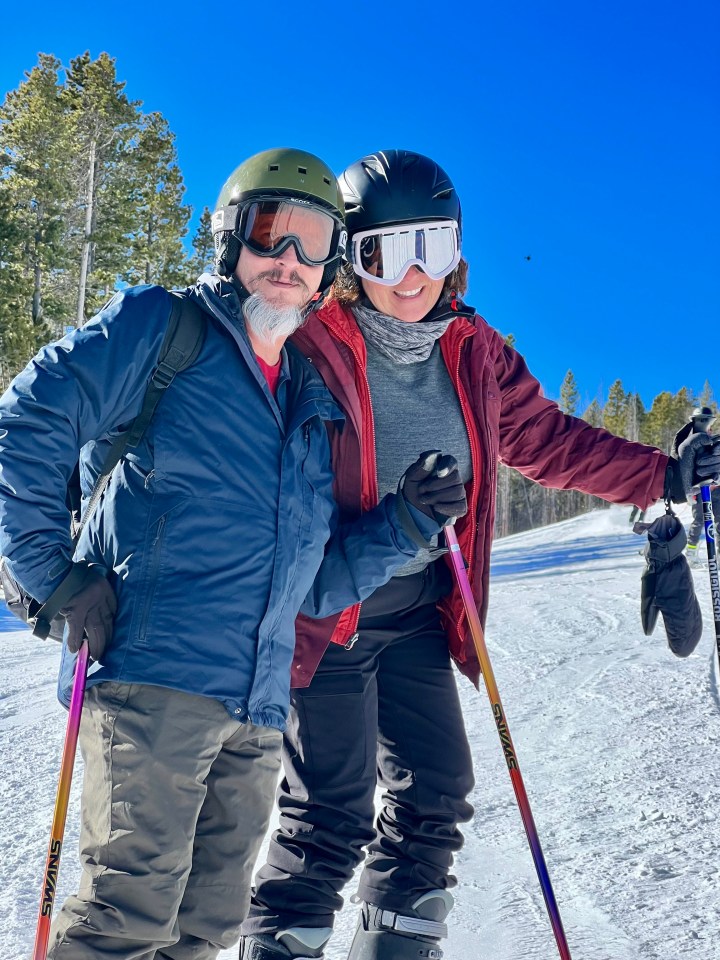
Keeping your skis together is not just a skiing skill, it’s a happy marriage secret.

Second, at Breckenridge we park at the free lot and take a bus to the lift. Whenever and wherever we go we usually pack our lunch and avoid the movie-theater-concessions pricing for food at the resorts. Just when I think I feel too much like a skin flint, I see other people eating food they brought as well. 

It isn’t just skiing; we travel cheap in general. Last September, we found ourselves housesitting again on the Gulf Coast of Florida and a woman taking tourist surveys approached us near the beach at Sarasota and wanted to know how we had spent only a few hundred dollars for a two-week beach trip. Pretty sure we skewed her survey results. Along with housesitting, we “freecationed” by cashing in some credit card miles to stay a couple nights at a fancy hotel and do a kayaking tour to see manatees in the bay. (Though that wouldn’t be financially savvy if you didn’t pay your card off, obviously.) We also ride local buses in lieu of more expensive ride shares. We walk and bicycle. We do libraries and parks, walk along the beach and window shop. And we get food from the grocery store and reserve eating out for a few well-timed occasions. A perk of living in a place like Colorado where everything from food, to stays, to skiing, is expensive, is that when we go most other places, we get a little bit of a price break.

Also, just being able to go find adventures makes us both happy enough that we don’t need luxury level. And each foot we gain in altitude driving up into the mountains to ski pulls the stress and worry from our faces. The vertical feet we drop zooming down the runs helps us find our happy places, too. Maybe a piece of it is something of the discipline of simplicity. If I remind myself of that, I can be even happier thinking about freely enjoying the great riches of a place like the mountains. And how spoiled we are to know their Creator–the same one who also made Tahiti!

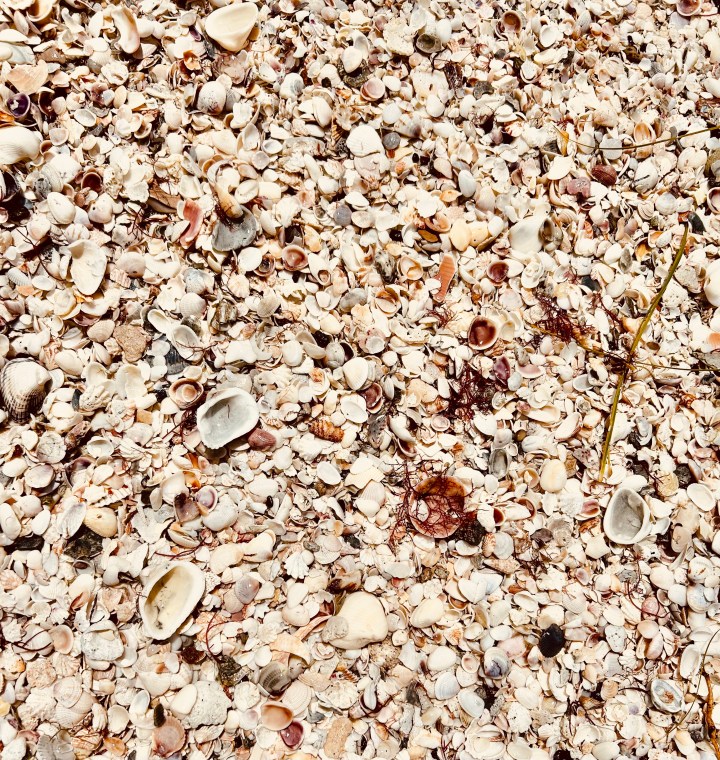
Venice, Florida, offers free souvenirs, and plenty to go around after hurricane season.

And once we’re tired, maybe a little sore, and ready to change the heft of ski boots for bare feet, we sometimes head to the nearest hot springs. We’ve been to more than half a dozen around the state over the years. I wish we could go more often but spoiling ourselves with a relaxing soak has gotten expensive. The only way to save money is to bring your own bathing suit, towel, and water to drink. The steamy view of the snowy hills and red rocks, the sound of the river gurgling by, maybe eagles soaring overhead or a meandering bighorn sheep—all no extra charge.

###
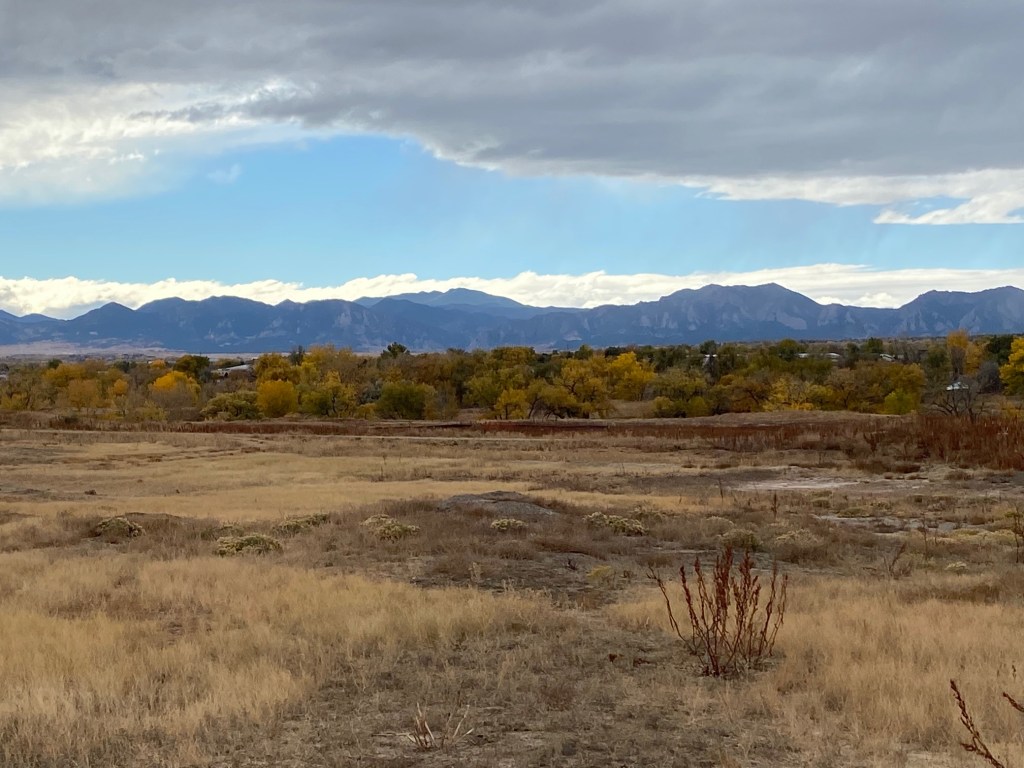
Afloat in the Ozarks

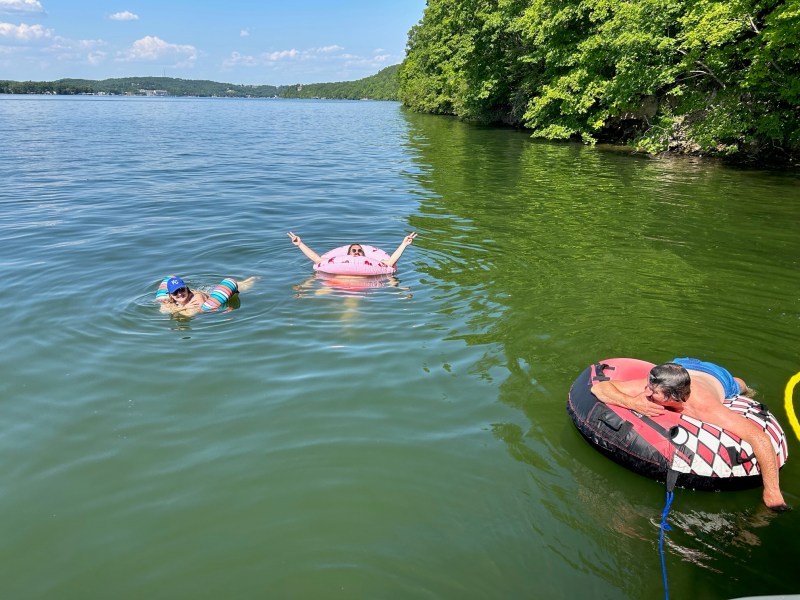
In June we awoke to chirping Carolina Chickadees in the towering old elms and pines that surround a kitschy cabin with a view of the Lake of the Ozarks. The brown wood house has been a vacation spot far a midwestern family for years. It sits on a quiet bay of the great lake, where boats putter by to their docks, where turtles sun on logs, and where herons stand gazing out at the water like bird philosophers. 

We had said yes to old friends, who know the cabin’s family, and invited us by extension, for a welcome diversion from our suburban life. Ron fished. I wrote. We hung out near Sunset Beach with our people.

The Ozarks are a place neither of us had ever been. The lake is manmade, like Lake Powell, people having decided in 1929 to dam up one end of the Osage River and see how many valleys and towns would be swallowed up to form a massive, deep-water lake with few shores. If Lake Powell is a bathtub, its sides ringed with the rising and evaporating water lines, the Lake of the Ozarks is a giant’s hands cupped full of water for a drink. Steep hills thick with trees line the sides of the water that spreads out over several channels, dragon like across the middle of Missouri. 

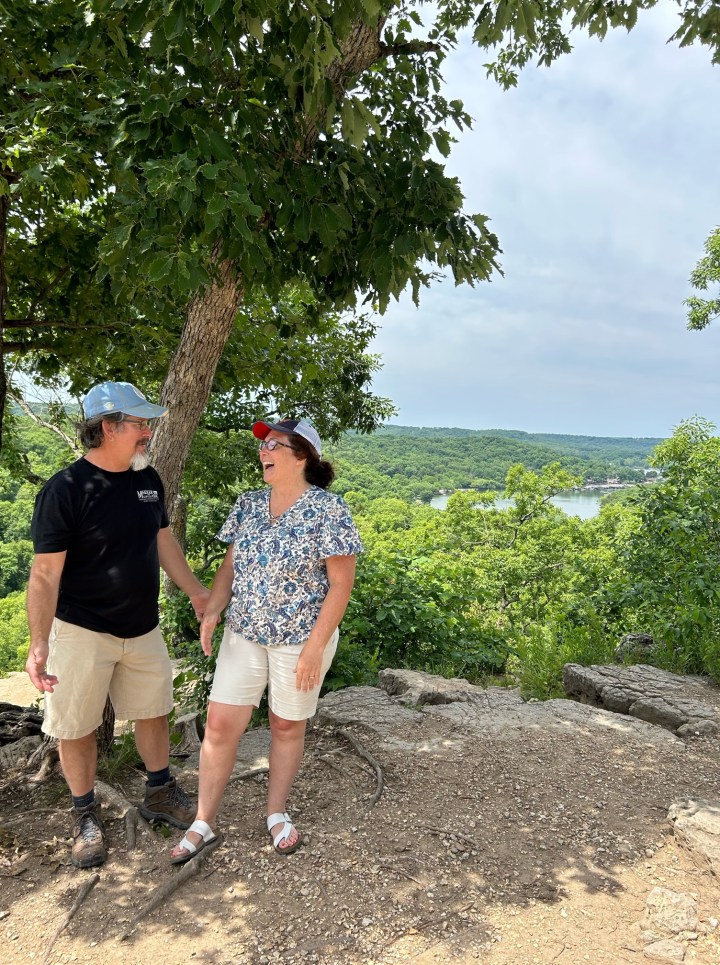
The weather was cooler than we had anticipated, and we enjoyed many a night with the windows open to the fresh air. We hiked to a castle ruin in Ha Ha Tonka State Park a couple of days and enjoyed our time in the woods despite the ticks.

The story of the castle isn’t much different than Jane Eyre if you add a bit of imagination. A wealthy Kansas City businessman (Read: Mr. Rochester) conceived of building a Scottish style castle for his family in 1905. He even brought in Scotch masons and constructed a mule cart track to pull rock from a nearby quarry. But just a year after beginning the massive project that included gardens and carriage houses, the man was killed in a car accident—a relatively new way to die at the time. (Also, this is more Great Gatsby than Jane Eyre.) His sons finally finished the castle some 16 years later and used it for a summer home in the 1920s. I imagine a plethora of Gatsby-esque fetes in those halls. It was let out as a hotel in the 1930s, where I presume many Agatha Christie mysteries were hatched. Then, in 1942, the roof caught fire from a chimney and the whole thing burned down. And we are back to the Jane Eyre narrative. (Read: Bertha burning Thornfield to a charred ruin.)

The stone walls that remain are high atop one of the rock cliffs overlooking the lake. The view was a delight at the end of our hike—though you can drive to the top as well. You can also hike down and around a spring, hitch a ride with a friendly boater, and climb back up by the quarry. (You know who you are.) Though I recommend padding along the planked path that winds up the side of the cliff to the castle. 

The draw for me was the evident history of the place. While most of the Ozarks has more of a convenience mart, fudge and saltwater taffy, gas and groceries vibe, the castle shows the vision of a man who saw this same land more than a hundred years ago, even before the lake was put in. And even before that, the plentiful small deer, squirrels, catfish, smallmouth and largemouth bass, turkeys, and armadillos, as well as the black walnut and plum trees, gave us a good idea of what the Osage and half a dozen other tribes of Indians ate when they spent time in this place 200 years ago.

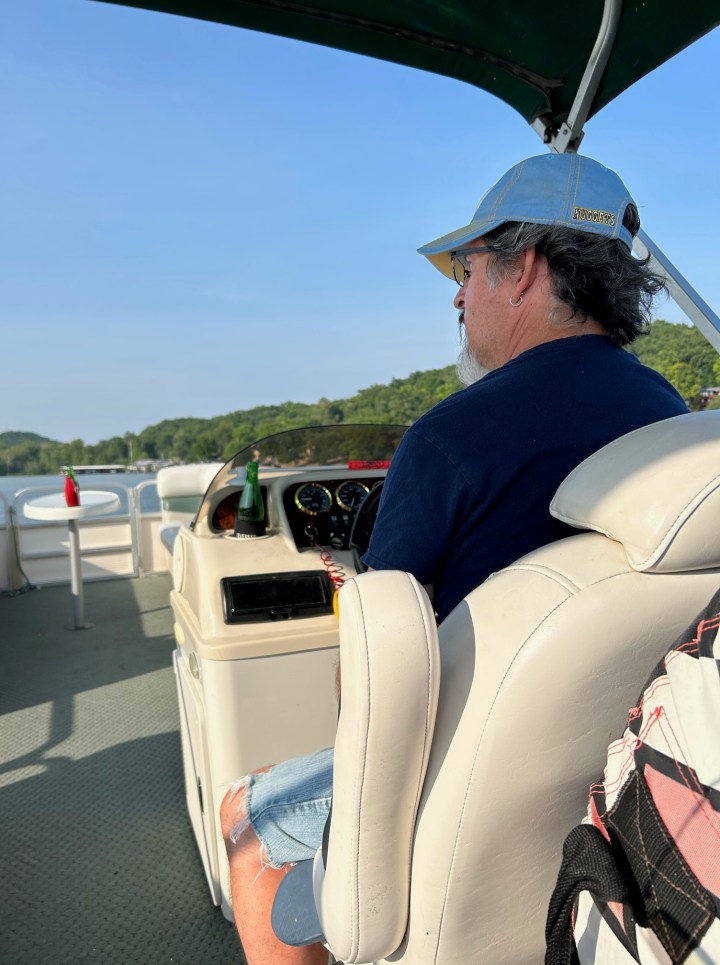
We ate much more fatty options, in abeyance to the culture of today’s Ozarkians, who eat Lambert’s Café throwed rolls and fried okra, along with sugary macaroni with tomatoes, and cornbread with sorghum (my first taste of that syrupy sweetness). We also devoured towering plates of nachos, shrimp pizza, and fried catfish at the local bar and grills where Ron perfected his boat docking skills while curious lake lubbers looked on. Water challenge met; this mountain man decided he liked piloting a boat. Might want to do it again sometime. I said I would gladly ride along to get ice, dine out, or read a book while he fished. 

A Beach Moment that Lingers

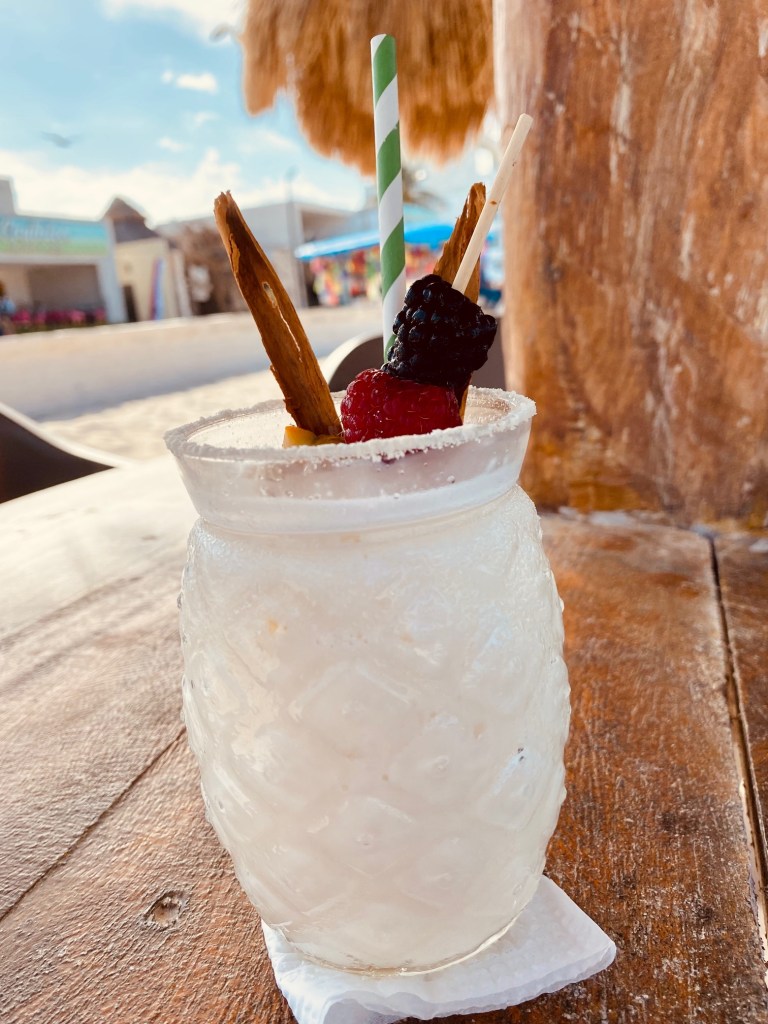
If I concentrate, I can still recall sitting on the beach at Progreso, digging my toes into the sand and sipping a piña colada made with sweet, fresh pineapple and soft, sugary coconut shavings. I remember the waiters, who had to cross the beach boulevard from the Crabster restaurant to keep asking me if I needed anything else.

It was not a cruise ship day, otherwise there would have been hundreds more people like me, tourists mulling about looking for T-shirts, or souvenirs, or bathrooms. The first time we journeyed north from Merida by bus and disembarked in this sleepy beach town, we heard the jolting noise of English being spoken with a southern accent. The words, already foreign sounding after a few weeks staying in Mexico, hit me from the tables along the avenue leading to the ocean. Gray-headed travelers in tropical shirts sat ordering beers and margaritas and eating barbecue marinated in the sour orange and lime of the Yucatán rather than the dry rubs or smoke of the places their accents said they hailed from. We walked on without belying our compatriotism. I just wanted to sit in the warm breeze, to feel the sun on my skin, and to look out on the Gulf of Mexico. I wanted to be mesmerized by the waves and by the squawking of flocks of gulls who undulated the same way.

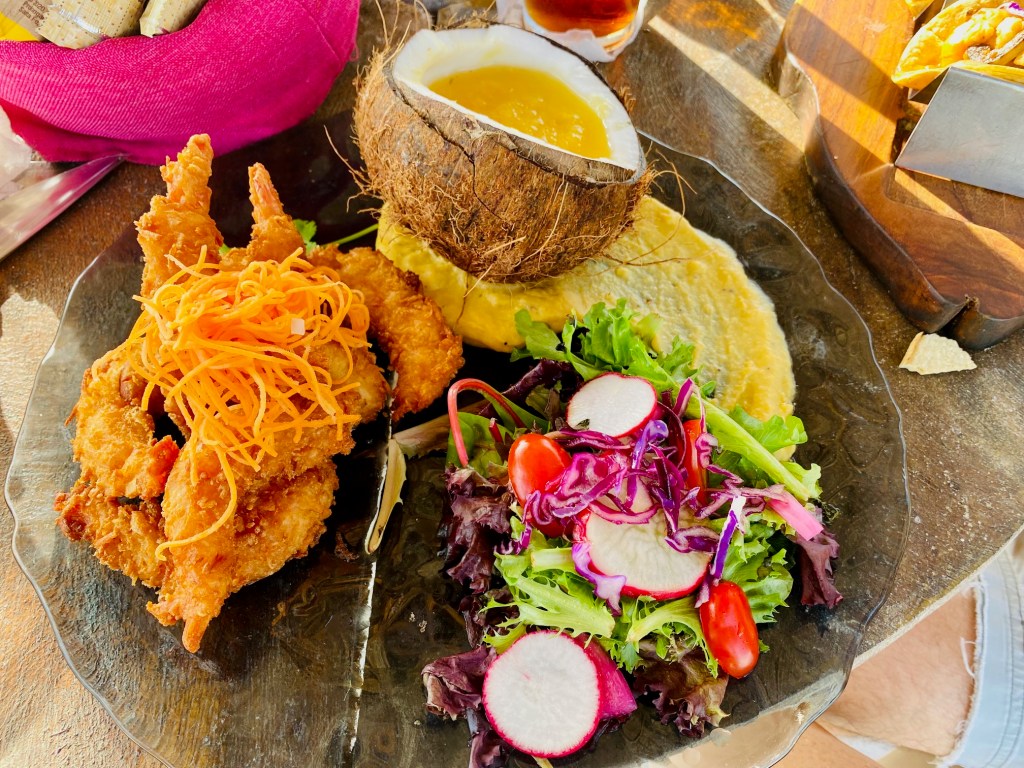
We ate pork tacos with habanero salsa. Huge shrimp encrusted in coconut batter and fried. Beach vendors passed by often, selling colorful whipped sugar candy merengues and caramelized peanut palanquetas. They hawked all sorts of wares held aloft on their heads or in big backpacks. A man selling large baskets had half a dozen draped over each of his arms and more piled on his back. One vendor rode the bus back to Merida with us at the end of the day, his pastry tray stowed somewhere below in a luggage compartment. The ride cost the equivalent of $1US each way. So, we rode with a crowd, though most appeared not to be traveling to sit on the beach.

I watched the fluttering of the umbrellas and palapas, the thatched roofs of dried palm leaves. They shaded tables and chaise lounges set up along the shore. I listened to the surf. I watched a Mexican family pull two white plastic tables together to accommodate everyone for a child’s birthday party. 

Further down the beach large palapas stood at the ready to accommodate more people in search of shade. And still further a newer restaurant with a multi-level, open-air deck that ensured every table had a view of the sea. Swings on ropes and palm trees growing up through the rafters made the place feel like an Instagram picture from Tulum. That made it more expensive than the other places.

Yes, I like piña coladas. This one has a coconut sugar rim, Mexican cinnamon shavings that are like the more relaxed version of cinnamon sticks, and a skewer of fresh pineapple and berries.

Only a few more historic establishments remain after decades of hurricanes and the ebb and flow of tourism on this sleepy coastline. But the city rebuilt the seaside in the last few years. The malecón is now a low concrete wall, turned into seating in spots and undulating along the ribbon of beach kept the sand and water on one side and a wide boulevard on the other for pedestrians, bicycles, and every hour or so a truck full of police decked out in military-style uniforms and holding automatic rifles. In places like Mexico this show of force is a comfort rather than a threat I suppose. I prefer the bicycle cops of California beaches who seem harmless, and yet ready to confront whatever trouble comes. 

Sleeping dogs flopped in the warm sand against the sea wall and lay contentedly snoozing, flipping their tails like horses to defend against the odd fly. The mid-80-degree temperature was perfect. I waded out into the water far enough to feel its December chill, but I never got too warm sitting on the beach to require more water dunks, just more pina coladas, or Mexican beers, or Topo Chicos.

Boats on the Gulf.

The beach faced north, so the sunsets faded out of view. And we meandered back to the bus depot to board the ride back to the city. It was only a little over an hour along the highway. We disembarked at the stop by Paseo 60, the huge new complex right around the block from our rental house. It had a massive open-air plaza with a waterfall cascading over plexiglass, a stage curtained with sisal ropes, old henequen manufacturing equipment turned sculpture. Escalators and shops, a hotel, a coach depot for high-class road trips daily to Cancun and elsewhere. We walked along the narrow sidewalk and turned down Calle 37 toward our house. Weeds edged out from cracks and the concrete crumbled in places. We passed old single story colonial houses, one that had been turned into a boutique hotel on the corner.

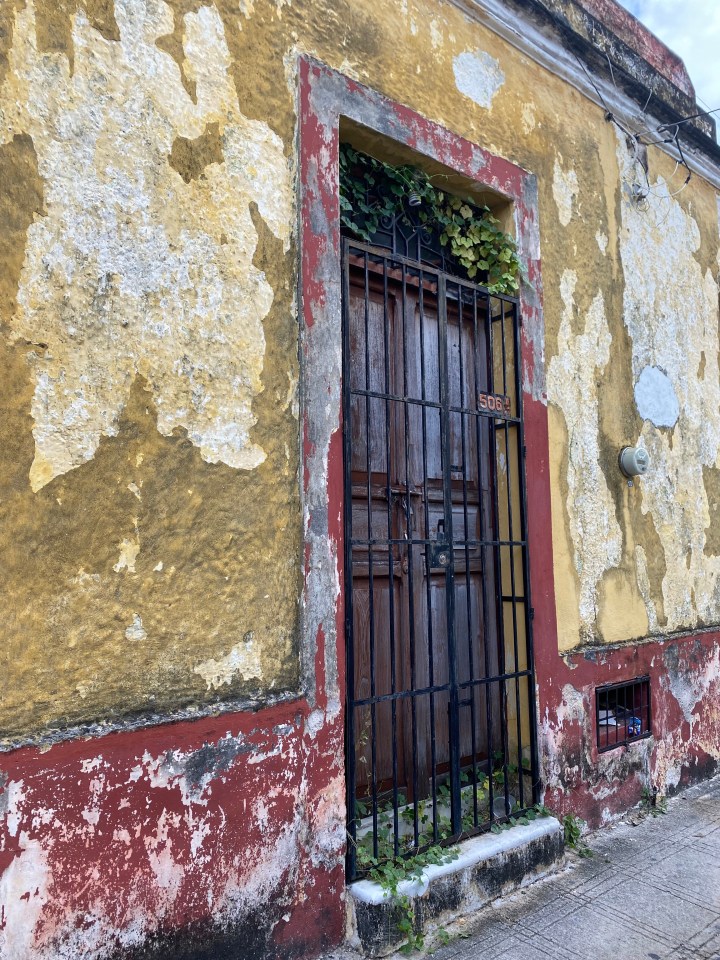
It was one key to open the wrought iron gate over the front door, and then another key to unlock the wood door, weathering badly in the tropics. I stepped into the cool of the cavernous living room, slipped off my flip flops to spray the sand off my feet with a water bottle left on a little towel just beside the door. The tile was cool beneath my bare feet and I padded across it into the kitchen and sank down into one of the equipale chairs of pigskin and slats of cedar. The sun of the beach still felt warm on my skin.

If I concentrate, it still does.

A Bit of String in Merida

A labyrinth of concrete, some crumbling, some intact. Facades painted pink, periwinkle or warm orange. Black wrought-iron gates and railings. Oiled hardwood doors. Narrow sidewalks. Cars speeding along thin streets. Centuries old buildings standing silently bragging, like elders, with the assurance that only comes from having seen several lifetimes. This is a place called Merida, Mexico. 

The ancient Maya people of the Yucatan peninsula built massive structures for sport and religion here more than a thousand years ago. They had their own calendar and written language. But when the Spanish conquistadors arrived in the 16th century, they brought Catholicism and erected the large cathedral in the grand plaza in the center of Merida. It stands over the site of much more ancient Mayan structures. In fact, its constructed with stones from the Mayan buildings. So are the colonial houses and buildings that radiate out from the plaza. 

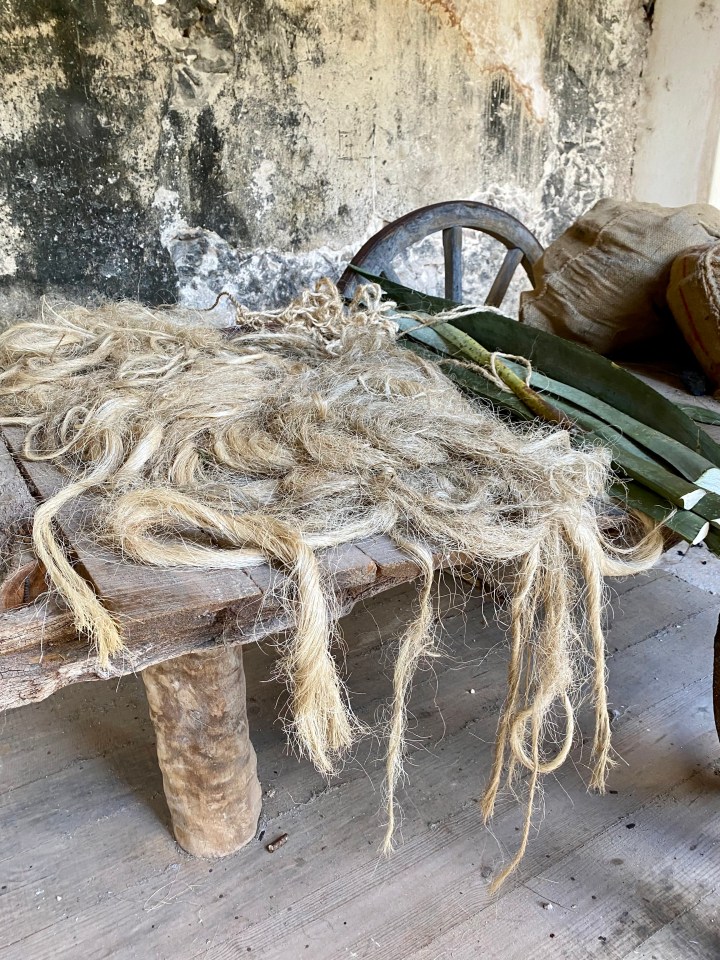
Three centuries later, at the end of the 19th century, wars and innovation brought sudden wealth and growth to the Yucatan again, in the form of string. That’s right, twine. The Mayans had long before used a variety of agave plant called henequen to make rope fiber called sisal. They wove it into hammocks, clothes, and hats. The Spanish decided it was also good rope for their ships. But mid-19th century hacienda owners began growing the plants in earnest. They brought in newly invented machines to strip the leaves and dry the fibers. The demand was so great that it spawned dozens of sisal millionaires. Millionaires! From string!

Henequen plants still being cultivated outside Merida, Mexico.
The fibers from the henequen plant’s leaves are dried to make strong fibers for rope and other textiles.

The wealthy elite built large mansions all along the wide boulevards of Merida. They built schools and hospitals, paved streets, and installed sewage systems. And when the string industry succumbed to politics, revolution, war, other suppliers around the world, and the invention of synthetic fibers, these stately homes and most of the haciendas where sisal was produced were abandoned and fell into disrepair. Some lasted into the middle of the 20th century. Many became hotels. Some became businesses or government offices in this city that is the capital of the Mexican state of Yucatan. Some are now part of the newest industry in Merida—tourism.

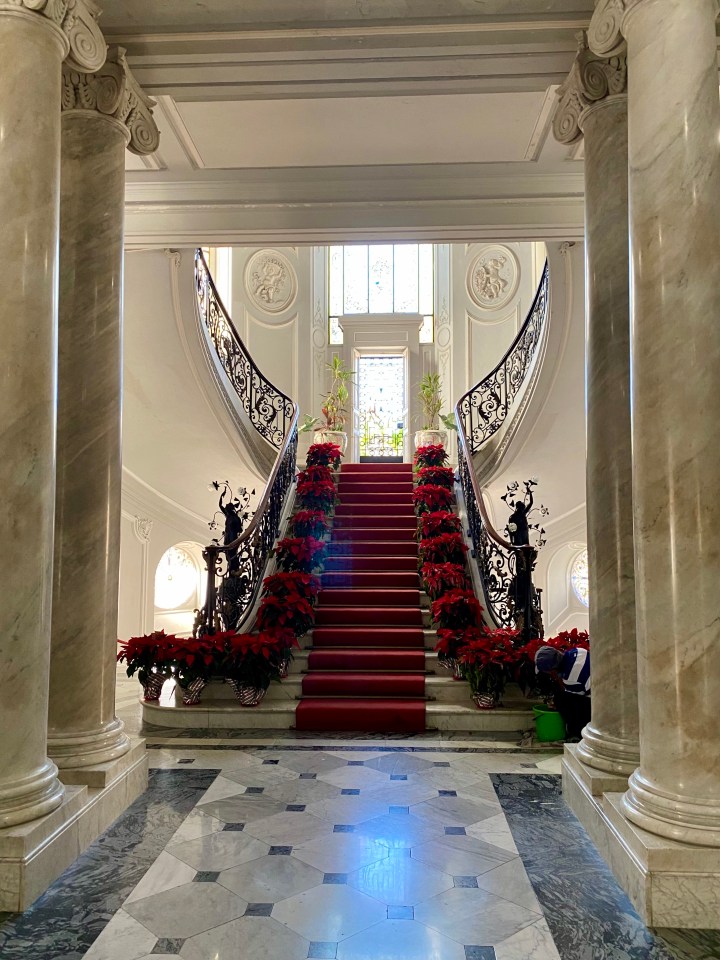
We toured the Casa Gemelas, an impressive mansion built from string money back in the day. This house just opened a few months ago for tourists to peek inside the palace. The awkward young man who was our guide said the place was at one time host to Jacqueline Kennedy and Princess Grace. He said to google it. 

At the end of our (overpriced) tour, our guide whispered for us to lean in closer. That was a little awkward. But when Ron and I obliged, along with men from Guadalajara and New Jersey, he told us in hushed tones that the owner of the house had just walked by. He discreetly pointed out an older woman as she was leaving through the back gate. Our small group had no idea what to make of that. It was like seeing Lord Grantham from Downton Abbey, skulking around the back of the manor house, embarrassed to have been forced to become a tourist attraction for financial solvency.

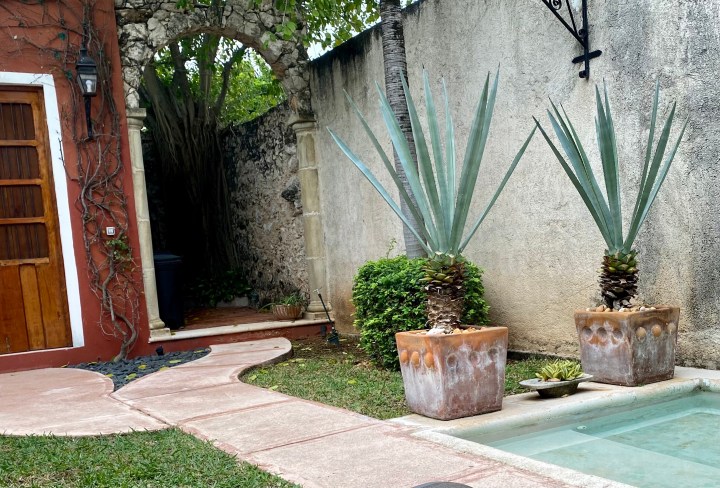
A view from our backyard in Merida, where we have our own pair of henequen, or “green gold” plants.

I doubt the Mayans who roam the streets of Merida hawking colorful embroideries feel this discomfort. They’re just trying to make a buck. And the Mayan calendar knew a thousand years ago that history repeats itself. Sometimes you’re conquered, sometimes you’re on top. And while string may make a bunch of people rich for a while, it’s power actually lies in the sturdy tie it makes to fasten around whatever you need held fast. 

Five Simple Time Travel Hacks

  1. Go to Sleep

I once traveled internationally with a slight woman on heavy medication. During a long layover she stretched out on top of a row of suitcases lining a crowded African airport hallway, bunched a scarf into a pillow under her head and dozed off. Her literal layover zoomed by. She was a small spectacle, but those who eyed her with curiosity likely also felt great envy for her ability to time travel. I know I did. And I also admired her unconscious balance.

2. Cross Datelines.

In the days when Ron was traveling a lot I remember once he called from Southeast Asia on a random Thursday to update me on his schedule. He sounded tired, and I knew he was several time zones away. He told me without hesitation that he would be back Wednesday. That confused me. Local times and the rotation of the earth seemed compelling evidence that Wednesday had already come and gone over the entire earth. He said he didn’t know, but it had something to do with time zones, and he was really jet lagged.

I said something like, “Okay hon, love you,” and we hung up.

He’s finally done it, I thought. He can travel through time. 

I went to the living room to see if he was in fact already lying on the couch since the day before. 

He was not.

3. Make Up Your Own Version of Time.

In New Delhi, the time zone varies by an extra half hour. This is perhaps due to indecision, maybe a compromise, or possibly an attempt at mathematical precision between longitudinal meridians. Things were made simpler in China, a country more than 3,000 miles wide (similarly girthed to the United States) where they decided to have just one time zone, for the sake of unity. The unified Chinese experience morning whenever Beijing rises in the east; even if the capital is as far east of western China as New York from L.A.

Ron and I time traveling in Ethiopia circa 2005. It was still 1998 there.

My favorite made up time is in countries where the calendar is set on an entirely different year. Ethiopia is seven years behind the rest of the world. Their worldwide pandemic began in 2013 and rages on now, in 2014. I hope their 2020 goes better than it did for the rest of us.

4. Do Nothing or Go to IHOP

Pandemic and retirement together have been a cocktail of tranquilizers given to us like we are about to embark on a multi-year space journey involving a sleeping pod. Doing nothing, and not much, and waiting for the world to re-open is a terrible way to time travel. 

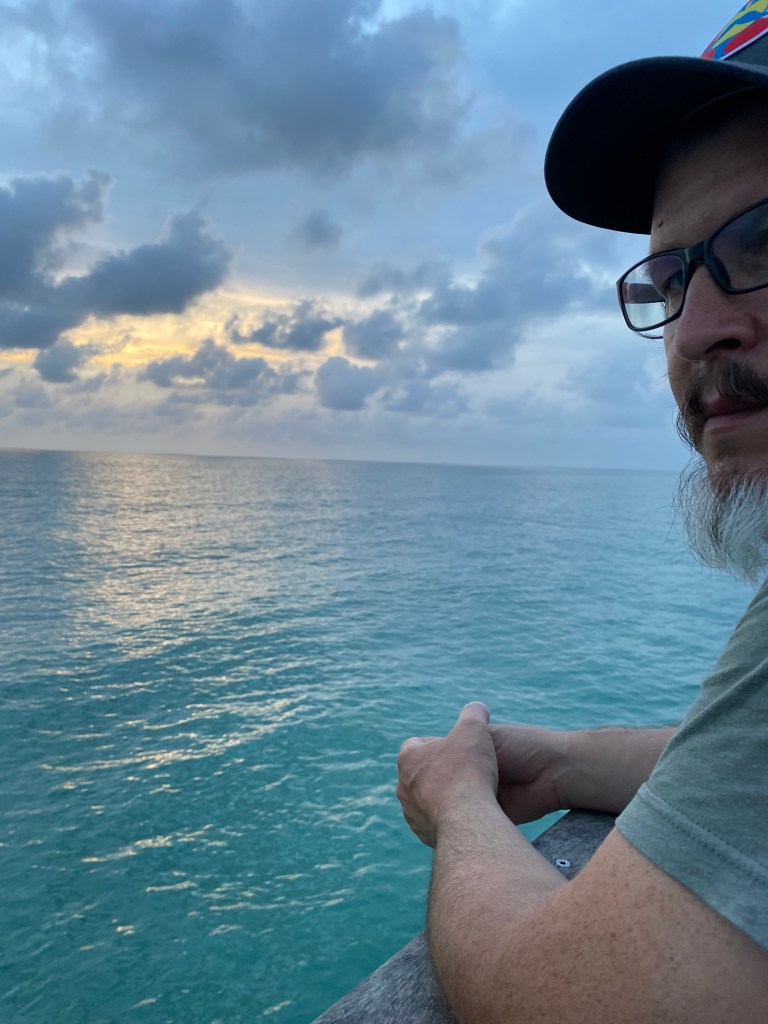
Looking across the Gulf, waiting on the world to change.

I realize that for most people drumming up pity for a problem like this is akin to sympathy for an American suburbanite whose latte wasn’t properly foamed. Still, I know it’s a real problem because it makes me jealous of the earth itself. How dare this planet continue orbiting around the sun and revolving constantly when I am forced to sit still? 

This yearning to be elsewhere is constant, even subconscious. On a recent Wednesday evening our car sort of turned itself into the International House of Pancakes after church. Were we subconsciously drawn to that word “international”? Maybe. It was breakfast for dinner, perhaps in deference to the fall season time shifts. We sat in a vinyl booth and drank weak coffee. 

“At least we have IHOP,” I told Ron, grinning with a mouthful of Swedish crepes and lingonberry syrup. 

Like most people, we’re waiting for the endemic, and more international possibilities than pancakes.

5. Mark Anniversaries.

In 2020, during the dark days of pandemic quarantine when time literally stood still, we began planning something to look forward to. Since then, waiting has seemed like the year-long anticipation of a pregnant elephant. But Lord willing, we will spend 30-plus days in Mexico to celebrate 30 years of marriage this December. 

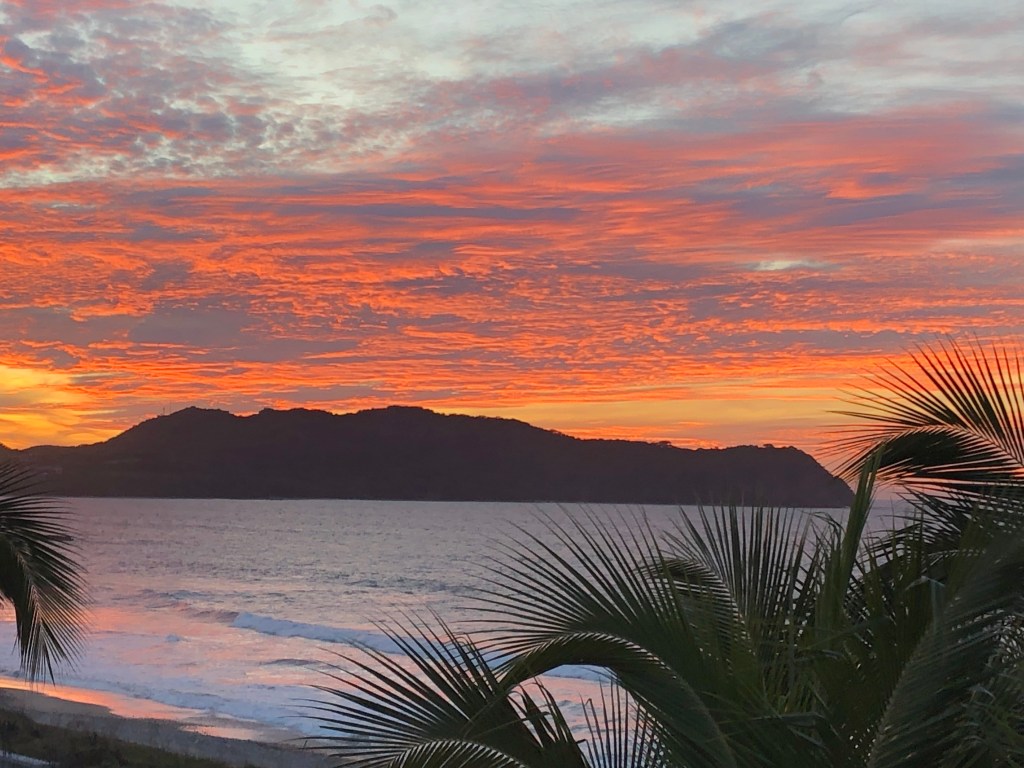
Sunset in Punta Mita, Mexico, 2018, the last time we left the country.

It sounds amazing, and it is, or rather, I hope it will be. But I feel a little disingenuous talking about it as though it were the only thing in our lives. We have regular lives with problems and triumphs, love and heartbreaks, like everyone. But once every 30 years or so, why not throw a Gatsby-level party for ourselves? Thirty actual years together have happened. Some were better than others. Some were memorable, others not so much. But the cumulation of shared experiences is astounding. And perhaps only long-married people understand how relationships ebb and flow, and how a lover turns into a friend, and then weirdly into a sort of conjoined twin.

So, we’re headed south to party like spring breakers with two heads. Except that now we’re 30 years older, fatter, and creakier. And when I wonder why I feel like I’ve been traveling through space and time for a few decades, I remember that’s exactly what I’ve been doing.

###
Riding Around Colorado

Ron and I have been walking everywhere lately. We’re trying to stay healthy and fit for our upcoming excursions in other places, and to get in better cardiovascular condition for ski season. We walk to the grocery, the dentist, the library. We walked our ballots over to the voting box this week for the election. It takes time to walk, and planning. But it resets the soul somehow, puffing out stress and breathing in the simple rhythm of walking upright.

But when I found a bike on Facebook marketplace for 40 bucks, I was ready to add to our exercise options. It was clear out in the suburb of Aurora, but for $40, we figured we could afford a road trip. We took the toll road that rings Denver all the way around to a place so far east it may have been Kansas. That added a few dollars to the bargain. The tolls in Denver are astoundingly pricey. (The toll from our house to where the bike was equaled $9.85!) 

Ron and I often walk up to Waneka Lake in Lafayette.

Ron still had his bike from 30-plus years ago. He dusted it off, greased it up and put the chain back on about 20 times during the first ride we took. No matter, our old bikes are seaworthy enough, not unlike the rather rustier ones we rode up and down the Gulf Coast in Florida this summer. (Grateful for those as I recall pedaling our way up Casey Key and wondering which mansion along the pristine beachfront was Stephen King’s writing alcove.)

It was in Florida where we re-ignited our interest in bicycling. It was primarily out of necessity since we didn’t have a car. But we enjoyed it so much. And now that we’re stoked on spokes again, this fall we have found Colorado to be, well, slightly hillier than Florida. In Colorado, even paths and roadways that appear flat from a distance have found us huffing and puffing in easy gears. 

“It is by riding a bicycle that you learn the contours of a country best, since you heave to sweat up the hills and can coast down them.”

Ernest Hemingway

Though they are daunting, all the hillocks also promise fantastic vistas. Pedaling up the Rock Creek and Coal Creek trails around Lafayette has shown us giant cottonwoods turning yellow, deep blue Flatirons slanting upward, and Long’s Peak rising snowcapped in the distance.

I’m also excited to be perched high on my bicycle seat when we ride through some parts of the trails around here that lead through settlements of prairie dogs—little beasts I find unnerving at best. I have rodent phobia (musophobia), so the few moments when we are coasting through prairie dog towns are tense. And Ron knows that sometimes something as innocuous as a breeze, much less a rodent, can topple me from a bicycle. So, when we cruise through rodentville, he looks back at me frequently, knowing how much I hate it. 

Along the Coal Creek Trail near Lafayette, Colorado.

But the dogs just sit and rudely stare, silently threatening to pop up or down like weasels, or tarts. Their shadowy holes lie waiting to startle me like a jack-in-the-box or a whack-a-mole. But phobia or no phobia, we’ve had no incidents so far with these rodents. However, we have had a few minor maintenance problems as we get back in the groove of cycling.

Ron’s front tire deflated about a mile into one section of trail one afternoon. He had run over a couple of goat’s head weeds, also aptly named puncturevine, and well, his inner tube was tapped. I rode back the way we had come, and he walked his bike up to a trailhead where I eventually met him with the pickup truck. We drove off to Wal-mart for bike repair supplies, and Ron talked about how he had been impressed with the number of friendly offers of help he got while walking his flat- tired bike. He took it as a hopeful sign of humanity still left in our race. I hope he’s right.

###

Rugged Like the Colorado Rockies

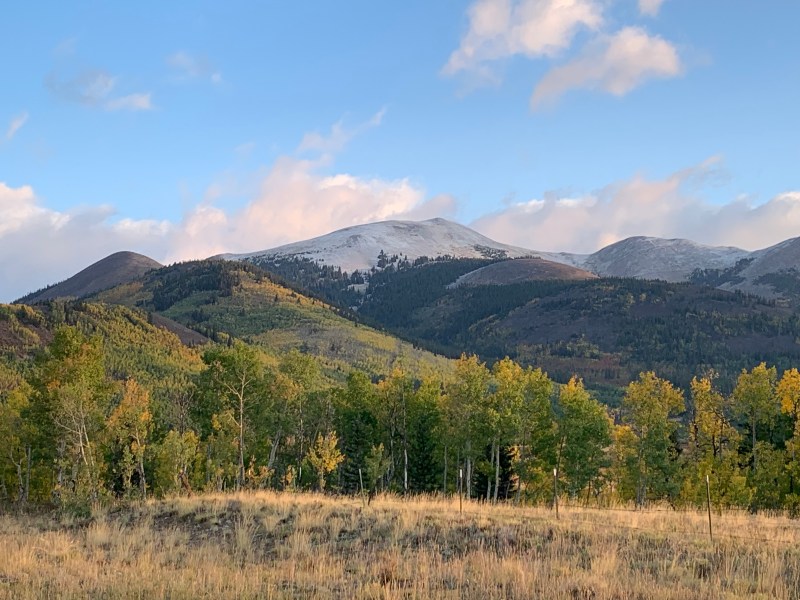
My in-laws live at 10,000 feet. By comparison, the highest peaks in Colorado are 14,000 feet. People feel sleepy in their cozy mountain house, because of the high altitude. Water boils 18 degrees cooler on their stove, and it is the best water I’ve ever tasted. Also, It’s also usually 20 degrees cooler up there in Como, Colorado than down here on the front range. 

In summertime this feels like a lovely reprieve from the 95-degree heat of the plains to the 75 degrees in the shade of the aspens and conifers that dot the hills up there. And looking out across the expanse of South Park is breathtaking. But then, the wind kicks up, which it does most days, and blows until most people head indoors and the cattle plant their hooves firmly at a slant, the way the grass grows. In the winter the wind and cold are enough to drive most people to warmer climes. I think my in-laws are among only a handful of folks who call Como home year-round.

They’ve had snow on the 4th of July up there. We’ve been nearly frostbitten and hypothermic sledding with my mother-in-law in the winter. The highway through the valley is closed many days when the road becomes indistinguishable from the ditch and the fields that lay beyond barbed wire fence lines that are buried in snowdrifts. We once drove home in a ground blizzard that obscured our passage except for the three feet just in front of the headlights that lit up the raging snowstorm like a swarm of moths at a porchlight. 

But in high summer and a few days in the early fall Como is idyllic. This fall we went up to help cut wood with the in-laws. We headed across a cow pasture to a stand of aspen that had died. Most had already fallen, and my father-in-law worked the chainsaw deftly on them until the bed of the old pickup truck was full.

We drove back and my father-in-law stepped to work at the gas-powered log splitter, and we made the mountain of firewood on the other side of his driveway a ½ ton higher. Tossing logs was good cardiovascular work in the altitude. I drank through my water bottle a couple of times. I kept taking off my jacket and putting it back on depending on whether the sun was behind a cloud or not. 

And although for much of the year Como is a less-than-attractive place to hang your hat, since it will actually blow away, my in-laws have been there long enough now that I know they’re just the type to stick places, no matter what. And while that has made them a bit more anxious than most about weather, it’s also instructive about who they are and about who my husband is. 

Ron Sr. and Ron Jr. working on firewood for the long, cold Como winter.

For one thing: he’s steadfast and constant—like the Como wind and his parents. He’s also a hard worker, since most things—firewood for example, but also vegetable gardens, satellite antennas, water, etc., require harder work to exist up there than in other easier places. And, perhaps due to all the hard work in a difficult place, his idea of adversity is a few clicks more intense than most people. 

He’s a mountain man, quiet like the long afternoons on a deserted hill with only the breeze in the pines and the chittering of birds to hear. He’s calm like the sun coming up over the peaks. And he has a depth like the clouds gathering in the west over the Rockies.

I used to spend my summers in Como when I was a kid, going to the camp there. I remember sitting on the wooden veranda of the mess hall, resting my legs on the log railing, and soaking in the sun. I remember the cool of the shade through the trees to the cabins, and hikes high up little Mt. Baldy. I was in the slow group, pretending to stop for pictures quite often. In contrast with my husband, my experience of Como says a lot about me. I get bored with the same place all the time. I spent my summers goofing off, so I got pretty good at that. And most adversity to me is a fun adventure, like lighting candles if the power goes out for 15 minutes, not something to overcome for fear of literally freezing to death. So, although we have some shared memories of Como, most of our times there were as different as we are from one another. 

The aspens glowing gold and orange this fall in the Colorado Rockies near Como.

My husband went back up to Como several days in September while I was in Minnesota, and in October to wander the beautiful mountainsides in search of deer and elk. His photos show a picturesque but rugged bit of country where already the temperatures are turning to freezing. The first snow has long since landed, with plenty more to come if you adhere to the common saying about mountain weather:

“Nine months of winter, three months of fall, a breath of spring and no summer at all.” 

Still, my husband will likely want to be there. As John Muir said, he’s not so much in the mountains as the mountains are in him.