I registered for the event twice. I looted my local library shelves of three Edwidge Danticat novels. I read her writing craft book electronically. Then I drove into downtown Denver past young professionals and homeless camps and arrived at the Saturday workshop this Haitian-born author was to lead. I was early. I sat in a front row seat, blood buzzing in my veins.
Writing is such a solitary activity that any event that pulls word pushers out from their lonely spaces to mingle, speak, and listen to others is bound to be full of inspiration. And because of the pandemic, it had been a year and a half since Danticat was supposed to have arrived in Denver to speak with other writers and readers. And suddenly, in she walked.
She spoke about how COVID had showed people of every ilk what the solitary world of writers is like.
“The world learned how writers live locked in a room, trying to get inspiration from the air,” she said.
She also spoke about the idea of mortality—which has consumed the world since February 2020. “So much of writing about death involves writing about life,” she said.
You may know Danticat and you may not. You may google her and read her stories, you may not. She is award-winning and well-published with nearly two dozen novels, short story collections, young adult and children’s books, memoirs, essays, and anthologies edited. She also holds an MFA in writing from Brown and honorary degrees from Smith and Yale. Her career and accomplishments are impressive.
Most impressive this month was that she was also very generous. She listened as a few workshop participants read what they had written during the 10-minute exercise she led for us. She commented positively and asked to hear from others. She answered questions from the audience. I asked her about her writing process. And this was the most helpful thing to me since it is so similar to my own process. She said that her words don’t land gracefully on the page straight out of the chute, but that she edits heavily.
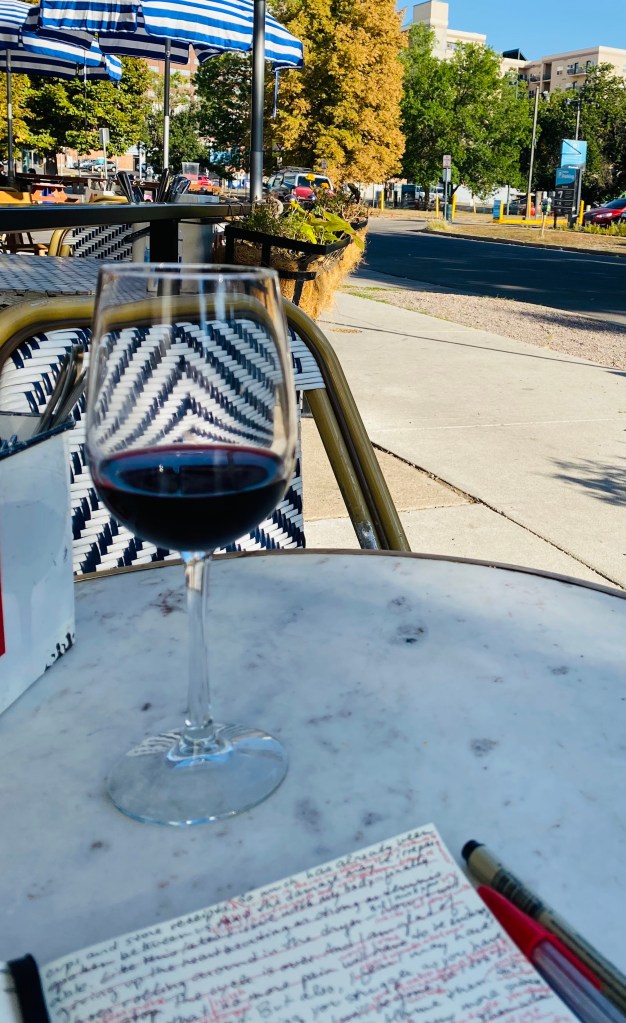
After the workshop with Danticat I sat at this sidewalk cafe table in Denver and worked on some editing.
This was a great relief to me. Raw talent would never be enough for me to land in Oprah’s Book Club—where Danticat has been since the early ‘90s. But editing heavily means that hard work pays off.
Honing skills and working hard are for anyone with energy and drive. Talent and luck are sprinkled around more arbitrarily it seems. And of course, as Eminem so famously rapped, opportunity comes once in a lifetime.
I’m so thankful to have had the opportunity to hear Danticat in Denver. I hope we are now best friends. Meeting her isn’t much of a travel story for this travel-themed blog. But the old adage that books take us to places we would otherwise never go, is true enough. And inspiration can also give us a ride further than any plane, train, or automobile. Hopefully this blog, though perhaps only a handcart on a railroad through the desert, can be some sort of transport for you as well. Thanks for reading.
There are lakes, too, of course, that’s Minnesota’s true license plate tag line: the land of 10,000 lakes. And beside each of these lakes a family member from my mom’s side likely has a cabin.
I told my mother I would be her travel companion this September so she could again visit her watery and forested homeland and see all the nieces, nephews, grands, greats, and great-greats. She’ll be 87 this year and all the trouble made these days through TSA, along with the degeneration of the state of air travel that has become more like taking the bus now, is a bit too much for this octogenarian.
Back in the day, my mom was a stewardess on Continental airlines. From behind her federally mandated COVID mask, she told the Southwest Airlines flight crew this bit of her personal history as we stepped aboard in Denver.
“Her uniform now hangs in the Smithsonian Museum in Washington D.C.,” I explained to reiterate that they had something of a legend on board.
When we disembarked that plane the captain spotted my mom on the way out.
“How did we do?” he asked.
She gave him and the rest of the flight crew a thumbs up.
We took an Uber to where the rental car was. Mom stood in the parking lot and asked Jesus to help us. I fumbled around on a newer app I hadn’t used before and wondered why there were so many black Hondas in Minneapolis. But soon enough, we were off, cruising north toward my mom’s hometown of Deerwood, pop. 553.
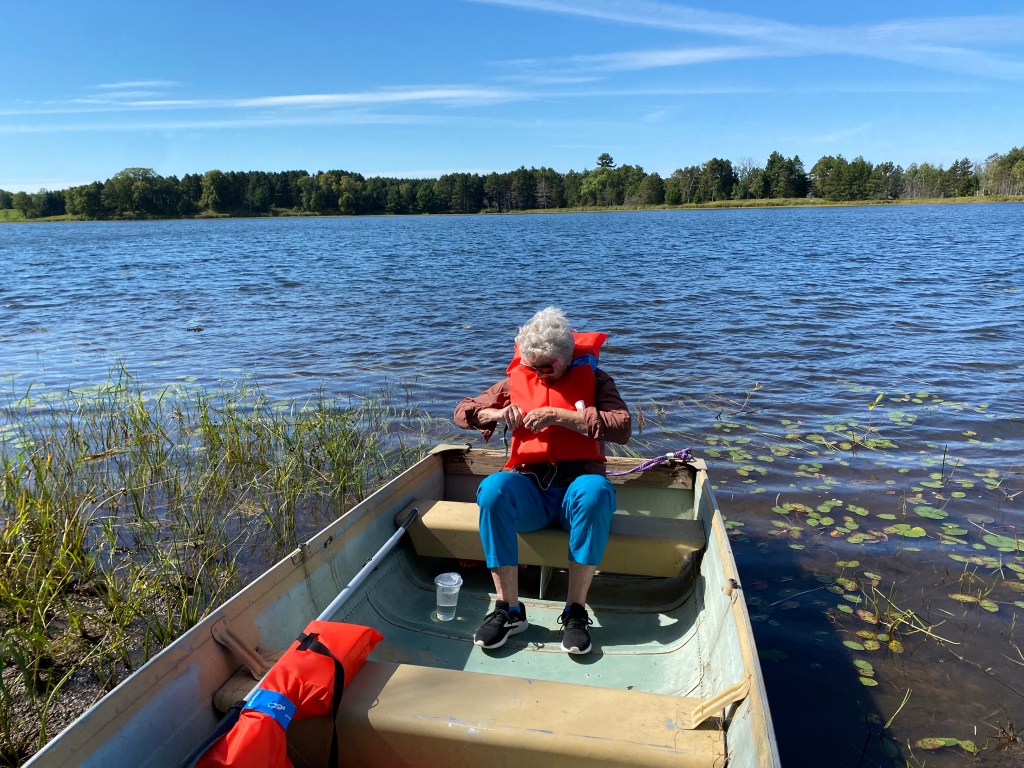
Mom’s getting strapped into her life jacket for our boat trip across Sunset Lake.
Country roads through thick forests of maples, elms, and pine gave way to large lakes with reedy shores. Green hayfields undulated into the distances and eventually led us past my two cousins’ houses and my aunt’s house to a cabin my Uncle Hub and his family built a couple decades before he died.
The first morning at this cabin on Sunset Lake I sat behind a giant wooden desk writing in the loft overlooking the water. Bright morning sun lit up sparkles across the blue of the water. And having re-read Huckleberry Finn this summer I was a bit intrigued with the island in the middle of the lake.
About lunchtime I convinced my mom to get into the metal rowboat that lay overturned on the shore at the cabin and adventure out to the island in the middle of the lake for a picnic. It didn’t take much convincing as she is likely the source of some of my adventurous spirit. Getting in and out of the boat was a little tricky for her, but once she was settled, I waded shin-deep into the muddy shore of the lake and tugged at that aluminum craft until we were waterborne.
I couldn’t figure out the oarlocks, so I ended up Sacagawea-style at the bow, kneeling and paddling like I was canoeing through lands yet uncharted with Lewis and Clark.
Mom wanted to take a selfie of us on the island.
Actually, the island is quite familiar. My mom said they used to take her mom there for Sunday outings. We stepped ashore and sat in the tall grass on a beach towel while we ate sandwiches and photographed the views. I found some old songs on Apple music on my phone and that seemed like pure magic to my mom.
Mother’s prayers were going up nonstop on the way back, especially when we were trying to get her back out of the boat. Finally, I hoisted her up under the arms and she was back on dry land and happier than Magellan to find shore again.
Meanwhile, my lake-water-soaked shoes spent several days drying on the deck and several days convincing me that something had died in my suitcase.
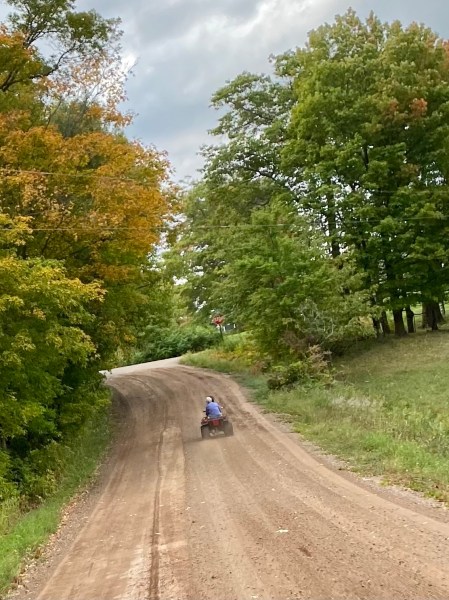
We visited with my Aunt Frannie, and her kids, and their kids, and some of their kids’ kids. We also saw kids and grandkids from my other aunt’s brood. They all drove us around their acreages and farms in ATVs. We went up and down dirt paths through woods, beside rivers where swans swam, through fields of cows and deer, and to other cabins, farms with honey, chickens and ducks, and wood piles that would impress Paul Bunyan. We ate meals together with family I’d never met or hadn’t seen in decades.
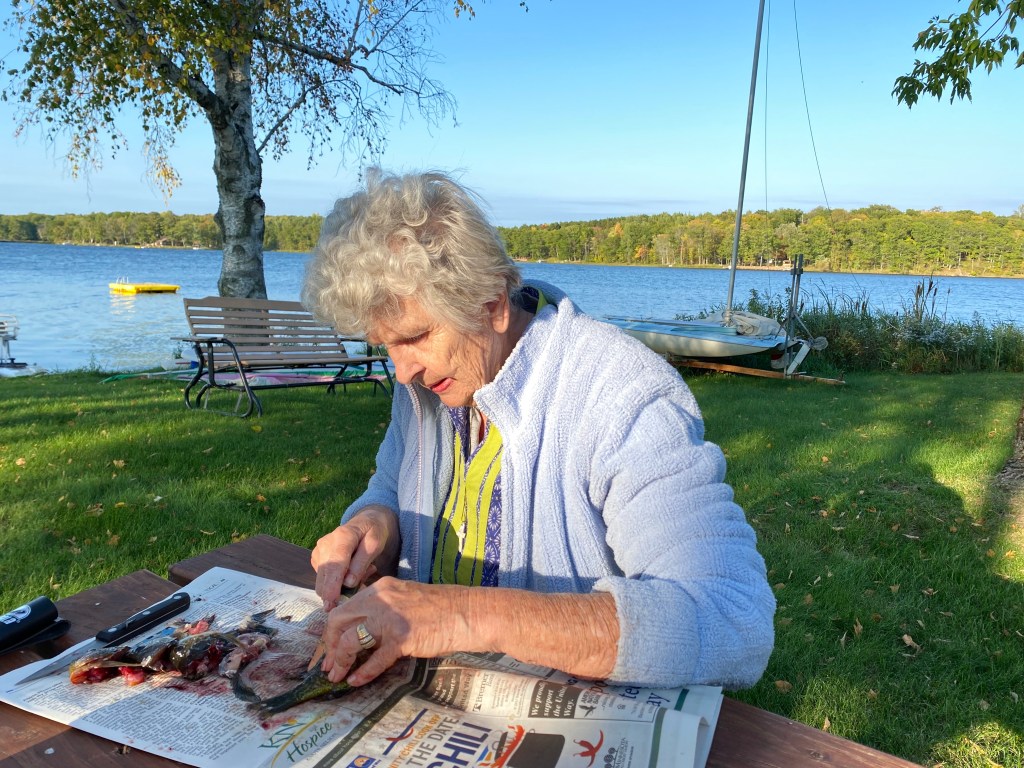
My mom cleans the sunfish and bass she caught in the lake.
My mom caught fish in the lake, and we watched deer parade across the grass and through the forest. As we drove the winding blacktop from one relative’s house to another, we watched carefully as each late-summer day made more and more green leaves turn yellow, orange and bright russet.
My cousin said she and her family started this cabin as a homeschooling project when her kids were in high school. It’s glampy and adorable.
Two nights we were booked at my Cousin Ginny’s more rustic cabin. We reminisced around a campfire eating s’mores and listening to my mother tell tales of the long, long ago. But the romance of clamping wore off the first night with my mom, for whom outhouses at midnight, loft beds, and carrying in your own water are memories from a poor childhood on a farm, rather than a way of living in her 80s. So, she spent the second night in my cousin’s house.
I spent a glorious few hours in the cabin alone. Surrounded by trees, the sound of wind in the leaves and birds chirping, I wrote and wrote. Late at night, lying in bed, I listened as coyotes came to dance and sing in the forest.
A dream space for writing.
This introverted moment seemed to surprise some of my relatives, maybe because they are so often surrounded by kinfolk. So, I thought about it a lot. In some ways I always feel alone—even surrounded by so many family members welcoming us into their lives for a few moments, asking my mother about the history of her clan, offering us chicken dinners. We are all part of others this way, but also, separate selves. Maybe, since I’m not from Minnesota, I’m less like a maple tree, dripping syrup into a bucket to boil down and share. Maybe, being from Colorado, I’m more like an aspen, singularly standing beside all the other aspens, yet deep down also linked together with the same roots that bind us all.
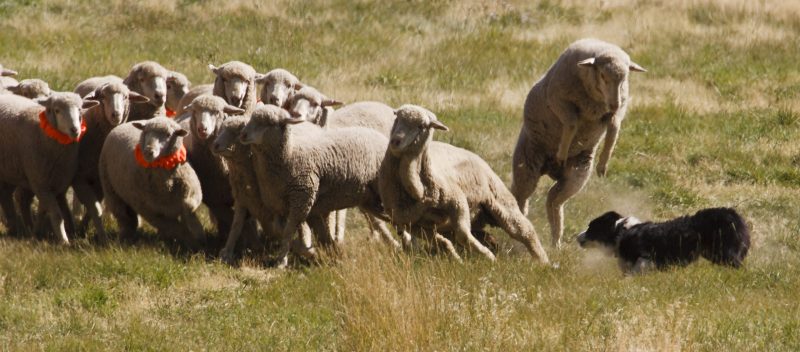
Sometimes I didn’t even hear the command, or the whistle that sent another Border Collie at a full sprint across the green pasture of The Meeker Classic Sheepdog Trials. But the dogs were easy to spot, their shiny black-and-white fur rippling with their speed.
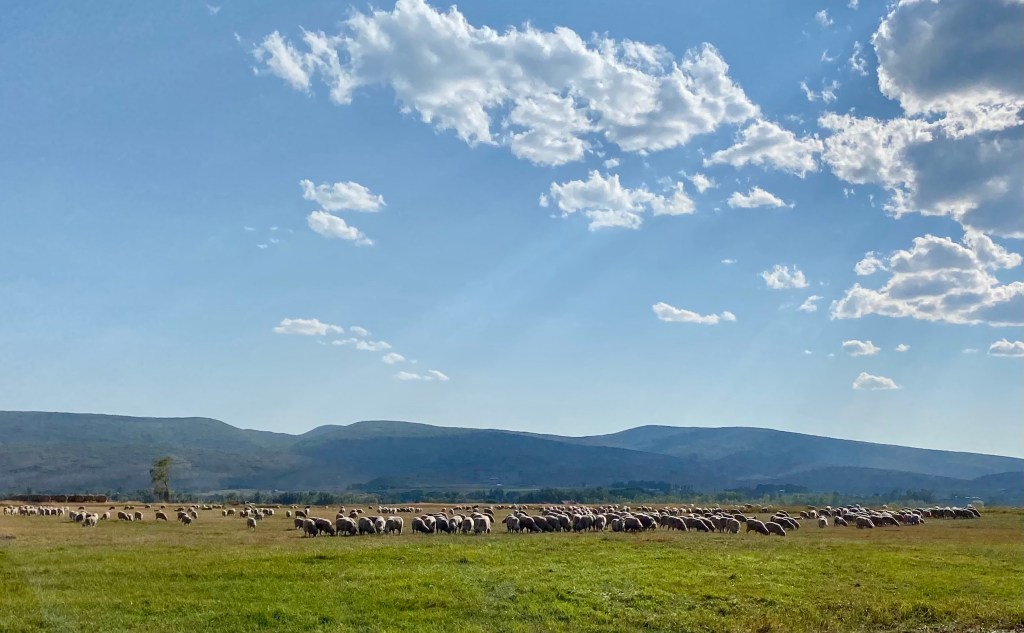
A small flock of sheep waited at the far end of the field, nibbling grass on a warm mid-September day. The dog’s body got smaller as he trotted his way between boulders and tall dry grasses at the edge of the irrigated hay. A flat-top hill in the background was dotted with obstinate pinion and cedar trees that are so characteristic of the landscape in this part of rural western Colorado.
Almost a minute later the dog emerged at the far end of the field. He lay down behind the small herd of sheep and listened for the whistling commands from his handler. Then he was up and working again, fetching the sheep in a steady and controlled pace back through two fence panels and around the far side of the handler. He herded them in a cross-drive, through two more sets of panels and into a shedding ring where the grass had been cut shorter and bounded by piles of sawdust. The dog’s pink tongue hung long at this point in the contest. The sheep were stubborn. But the shrill whistles continued long, short, and combinations that told the dog what to do. Multiple audible commands also issued from the handler telling the dog to “come by,” “lie down,” or “away.” The dogs must work with the handlers to separate some of the sheep away from the rest, and then pen them. Finally, after 15 or 30 minutes that seemed like hours of intensity, the contest ended with failure, no more time, or success. The dogs raced to jump into a tub of cool water.
We lived in Meeker, Colorado about 30 years ago from late spring to late summer while Ron was fighting forest fires for the Bureau of Land Management there. We met a sheep rancher’s son back then, whose family was well-known in the area for all things sheep. We remember his kindness, lending us some furniture for our sparse apartment in town and his warm welcome inviting us to the sheepdog trials, but we never made it. Fire season was always winding down by September, and I had taken a teaching job in New Mexico that year, so we were well on our way out of the state by the time the sheep were being loaded in the trailers to be herded around by the best-trained dogs from all over the world.
So, this year, we decided to make the trials.
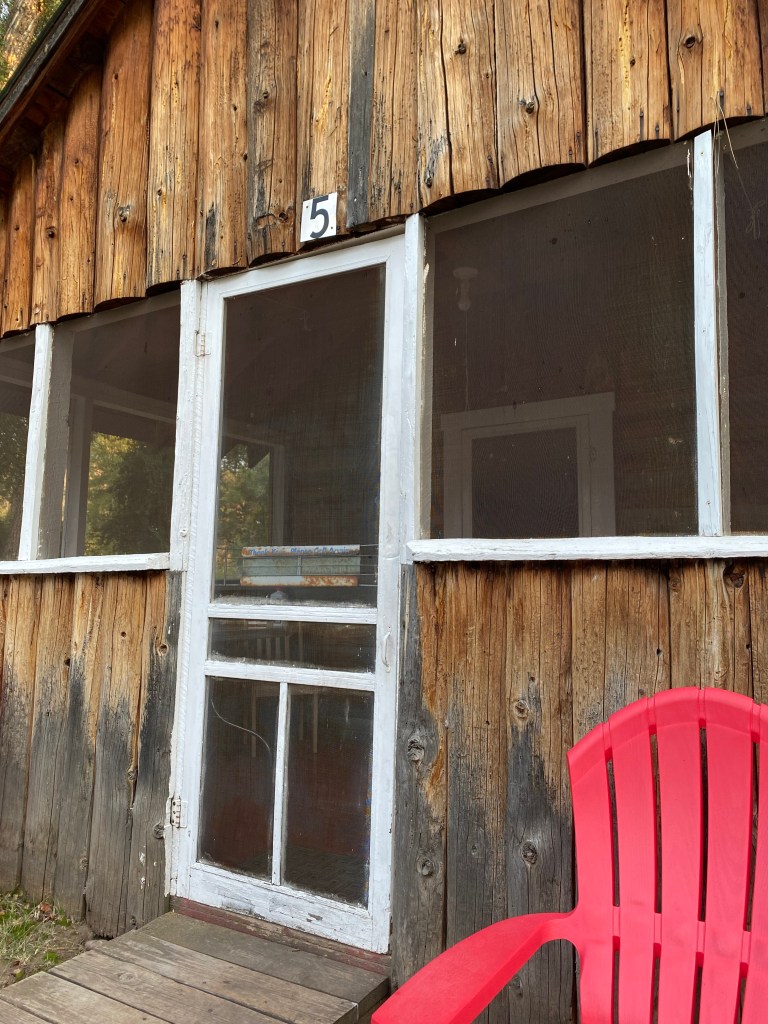
Our home for the sheepdog trials.
We stayed in Buford in a little one-room cabin with no running water. We grilled our dinners over charcoal and listened to the gurgle of the White River behind us. Then each morning at dawn we rousted out of our sleeping bags and headed 20 miles to the outskirts of town where the 2021 Meeker Classic Sheepdog Championship Trials began at 7 a.m. and ended around 4 p.m. We didn’t arrive on the scene until halfway through the second day of runs. We were given running orders with names of handlers and dogs, and we bought a program that explained the course. On one of the first few pages was a current picture of the sheep rancher’s son we had met decades ago. Our memories were faded, but it was him. We remembered his name. He’s a big sheepdog at the trials now.
I began writing down scores and we caught on to the rules and easily became fascinated to see what these incredibly intelligent and well-trained dogs could do.
Meeker, Colorado is a beautiful place on the Western side of the state with plenty of room for sheep to roam and graze.
By the weekend, more people also showed up to watch. Some people said they had seen something about sheepdog trials on television. It happens in places in the British Isles too.
We ate lamb kabobs, lamb ribs, and sheep cheese. Everyone was so friendly, and we enjoyed the wide-open vistas and the weather. On the last day the air even cleared of all the California wildfire smoke that had plagued us in Colorado for the previous month.
This handler makes penning a group of sheep look easy.
The first few days a lot of no-scores came in. That showed us how difficult the course was—how stubborn were the merino sheep pastured in the high mountains all summer. But as the preliminaries turned into semi-finals, and the semi-finals turned into final rounds, the level of training and handling ratcheted up to an unbelievably impressive level. One whistle could stop a dog in its tracks. One word could turn his head to the left or right.
The human sheepherders below illustrate just how well sheepdogs work to move sheep. Sheepdogs run around and look sheep in the eye to get them moving. These humans are using noise, flags, and shoves to get the sheep into the trailer.
Near the very end of the trials a sudden rainstorm sent a downpour onto the field and emptied the bleachers during the second to last handler’s run. She and her dog finished their contest, the rain quit, and the final contestant ran. Then, a Canadian handler called Scott Glen, who had won the event in 2019 (2020 was cancelled.) was named champion again for 2021, this time with a different dog called Alice. The man and his dog went home with another championship accolade and a few thousand dollars in cash.
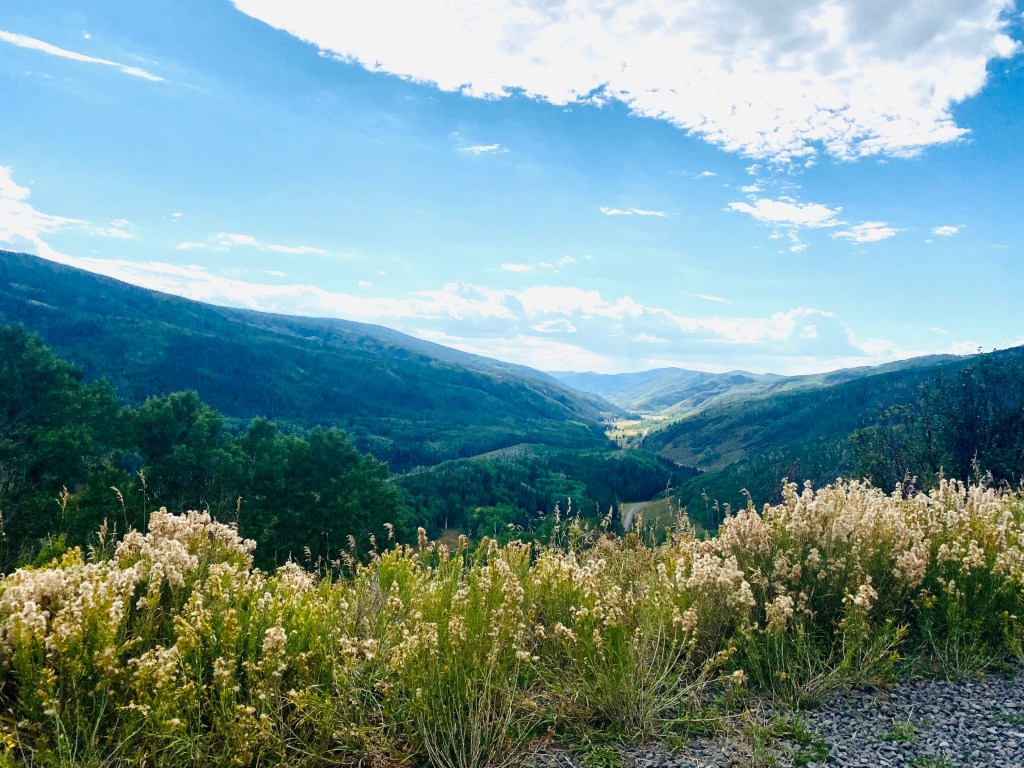
We went home through the Medicine Bow-Routt National Forest. We passed sheep wagons and shepherds watching wooly sheep grazing between sagebrush. We passed hunting camps set up high on mountain passes where scars from old forest fires competed with magnificent views of the Flat Tops and where the setting sun was herding the edges of the sky toward the pen behind the hills for the night.
Views from Como, Colorado make the world seem even bigger.
When we got home from Nashville, we jumped nearly straight out of vacation gear and into manual labor mode. This had been the plan, but the work we ended up having in front of us was a bit more than we had bargained for. Before we left for Florida, we had been living in the apartment in the basement of our house for a year, but we decided that when we came back, we would move upstairs again into the main house. We can make more money renting the big house, but we wanted room for our own house guests, friends, and family, and we enjoy having the big kitchen up there so we can have people for meals. Also, Ron really missed being able to sit outside on the back patio and look at the garden. (Me, too.)
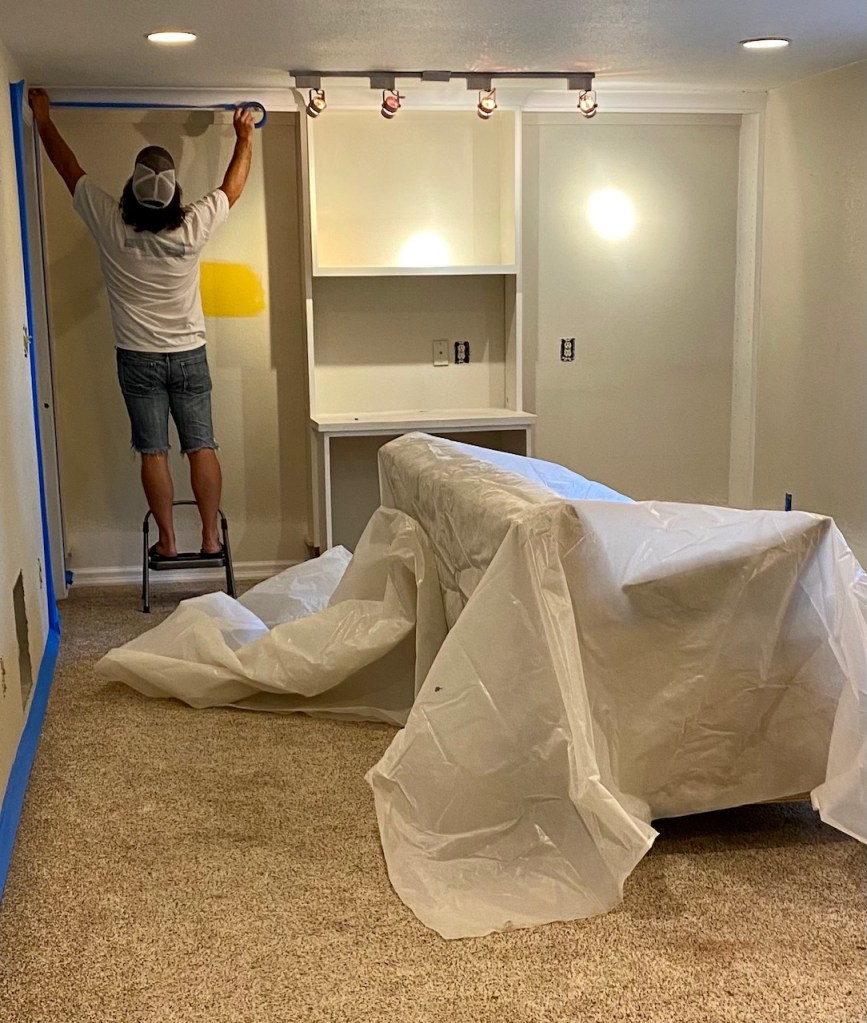
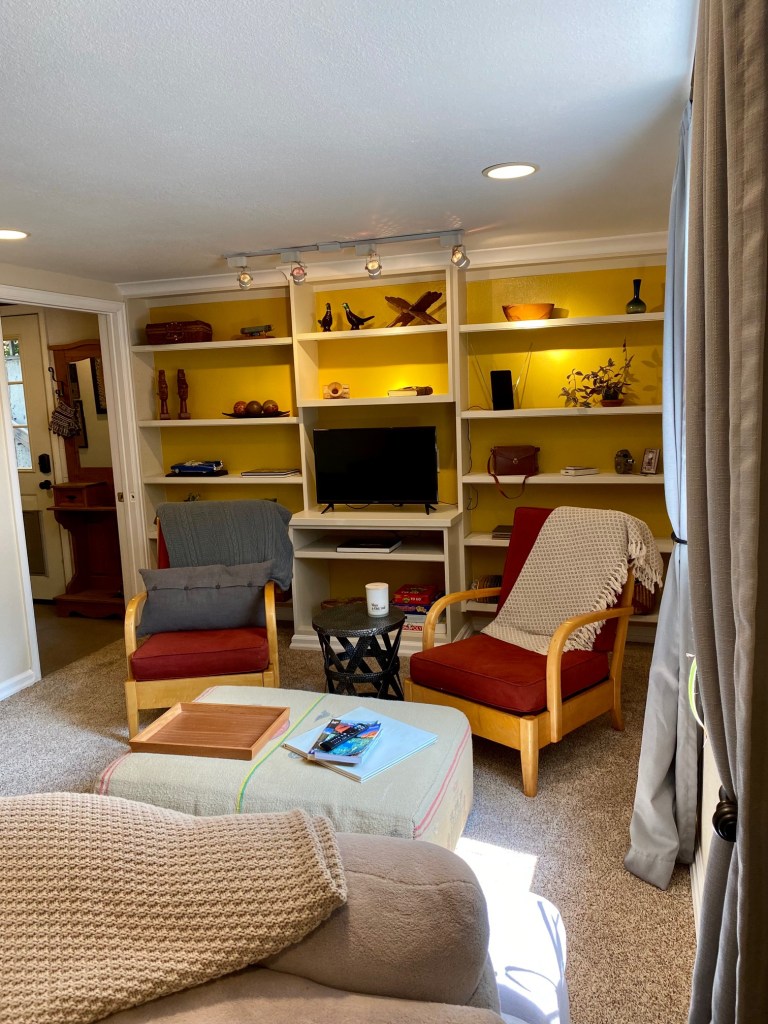
The apartment downstairs was the job in front of us. We planned to turn it into our next AirBnB project. The extra work came because over the summer, a torrential rain had flooded the entryway of the basement apartment, the laundry room, and the front of the living room where floor to ceiling bookshelves line the wall. My middle daughter was living down there at the time, and she did her best with towels, fans, and a carpet shampooer, but the water got soaked up into the bottom shelves of the bookshelf and warped all the wood and sopped the drywall. So, Ron had to cut the bottom stuff out and replace it. And, we didn’t really have a chance to get started on this until a few days after we were back in the state. The guests renting the house asked to stay longer, and then, Ron’s older sister got married again and wanted him to perform the ceremony. We headed up to the mountains for a beautiful backyard wedding in Como with family we don’t see very often. So, that was a sweet time.
Ron and I painted the downstairs apartment.
The next day, we finally got to work moving things upstairs, cleaning the apartment, and demolishing shelves and drywall. Then, Ron installed new shelves, drywalled and replaced trim, taped, mudded and textured. I was busy rearranging all the things we moved upstairs and all the rest that we kept downstairs, then organizing, shampooing carpets, painting, laundering, more cleaning, and then stocking this new AirBnB with blankets, dishes, towels, and everything else guests might think they need. I felt so grateful that I was able to shop at my own house (having been an AirBnB for a year) for most everything we needed in terms of furnishings.
All this work meant we had to take a few loads of construction scrap to the dump. But we also had to take several loads of yard waste. This was part of the extra work as well. The summer lawnmowing company was supposed to weed the yard, but they did not. So, waiting for drywall mud and paint to dry, Ron set in to uncover the front landscaping from bindweed. He hacked down giant stalks of sunflowers that had faded. And he filled the truck several times with volunteer saplings from all over the yard. Our house is on a double lot, so the landscaping is twice as much work as the housekeeping. When we’re home and can keep up with things it doesn’t feel so overwhelming, but we had returned to something of a jungle.
Now the apartment feels clean, warm, and welcoming for AirBnB guests.
Finally, we finished everything, and welcomed new guests to the refreshed space downstairs.
I’m always nervous about the first few guests and what ratings and comments they will leave. But I need not have worried. Everyone who stayed those first few weeks loved the place. So that was a relief. And now we are off and running with two small AirBnB spaces and living back up in the house. We haven’t yet been lingering on the patio in the evenings like we used to because the mosquitoes have been bad—we think because of all the overgrown weeds in the gardens.
But it is good to sit out there in the mornings and to be able to have space for guests. I like having my writing space back as well, in the office upstairs. Though the last few weeks I’ve found myself sitting in cabins in forests, typing out these blogs and working on some fiction projects. (Stay tuned for adventure stories from these places!)
We will likely finish reclaiming the rest of the back gardens later this month and into October. And the good news about all the early summer rains was that we will have a bumper crop of apples to pick in the next couple weeks. I don’t know what variety they are, but they have a nice blend of tartness and sweet and make great pies.
After picking, I peel them with my mechanical crank peeler. I slice them with a slicer, then sprinkle them with cinnamon and sugar and freeze them in plastic baggies that hold just the right amount for a pie. We’ll have enough for pies all fall and winter. Yum!
Many months ago, we began planning to visit some good friends in Nashville. We were looking forward to it like hostages creeping out into the light of day after more than a year spent underground in the bunker of COVID-19. But just as the hatch slid open and our eyes had begun to adjust to the proverbial sun again as the corona virus had receded somewhat, in came the Delta variant, and the rise of cases in the south of the United States. And Tennessee was smack dab in the cross hairs of zones in the country where more people avoided inoculations than got them.
A gigantic sunflower grows in my friend’s garden in Nashville, Tennessee.
So, the visit was in jeopardy. We were coming in hot from Florida, a peninsula the overly dramatic news reports had already painted red with variant cases. And our friends had already been dealing with some complex health concerns even before COVID was a thing. But hope was still alive, and virology. So, we got a quick swab up the nose at a rural drugstore, and that came out clean, so we headed over for a sweet time of meeting my friend’s newest family addition and watching him toddle around in the backyard while we talked and caught up.
We ate brunch, picked tomatoes from the garden, remarked over the giant sunflowers, and talked about kids, Jesus, and Scotland.
“Let us be grateful to the people who make us happy; they are the charming gardeners who make our souls blossom.” —Marcel Proust
It was simple and good and now I am praying that the Delta variant goes out again as quickly as it arrived and my sweet friend can have a hospital bed to deliver the next addition to her family, coming soon to a COVID-infested mess. Ugh.
Our Sunday night in Nashville, we checked out the bluegrass jam at The Station Inn—a place with the ambiance of a 1970s single-wide trailer, but the best bluegrass in town. Among other fiddlers and pickers, we heard a 12-year-old strumming a massive guitar that dwarfed him behind it but did not dampen his high tenor voice from belting out “When the Saints Go Marching In”.
Two other friends of ours drove down and the next day we hung out on the rooftop at Kid Rock’s Big Ass Honky Tonk and Rock-n-Roll Steakhouse with us. (That’s a real name.) This is quintessential Broadway in Nashville, the gritty honky tonk area of town where the beer is mediocre, the music is loud, and the people watching is better than on the bus. For example, this guy hangs out at Kid Rock’s:
We sauntered down the crowded street after a while and found another honky tonk where the band included a middle-aged, leggy blonde playing a flute. We checked out Printer’s Alley and then heard a busker under a concrete overhang whose voice reverberated beautifully in the urban acoustics.
Once we got hungry, we found a multiple-level food court with everything from poke bowls and pad thai, to nachos, cotton candy and boozy ice cream. We saved the southern BBQ for another place, another day—and it did not disappoint. As a recovering vegetarian (though it has been several decades) the sides were my favorite: banana pudding, potato salad, green beans, and macaroni and cheese.
And we sampled some Tennessee Whiskey—I’m capitalizing because that’s the brand name at Nelson’s Green Briar Distillery. We sipped tastings and heard the history of this spirit, including the shipwreck that sent the German immigrant family’s original fortune to the bottom of the sea—gold bars sewn into the patriarch’s jacket.
Then, we stumbled into the American Pickers store and priced what appeared to be the world’s first gas pump and other oddities. We drove to Franklin, Tennessee, and breezed in and out of historic houses, plantations, and Civil War battlegrounds and cemeteries. Then, back in Nashville, we got to hear the music at The Listening Room. And that music was amazing. (See the other blog about that.)
Our friends Jared and Lauren joined us in Nashville.
But there is also a certain kind of music in the rekindling of friendships. The long overdue visit spent relaxing in the sun with my friend and her family, and baby giggles bursting randomly into the air like soap bubbles sounded as good to my ears as the bluegrass ballads we heard at The Station. And reuniting with our other friends elevated even ordinary moments in Nashville. So, while I still find Nashville to be a magical city, I recommend being there with magical people as well.
A middle-aged man in a cowboy hat, jeans and sneakers started plucking out a few notes on his guitar and then sang out lyrics that seemed like an old favorite for him:
“You may think that I’m talkin’ foolish You’ve heard that I’m wild and I’m free …”
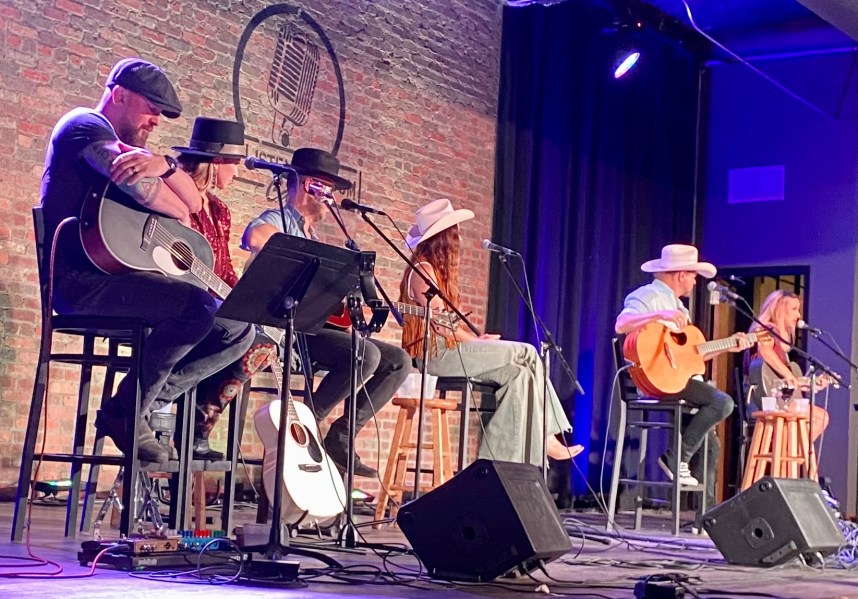
A Nashville moment hearing singers and songwriters, including Paul Overstreet, second from right.
My jaw dropped. It was a random August weeknight in Nashville, Tennessee, and we had chanced upon a small event at a place called The Listening Room. Just six people sitting on stools on a bare stage, four guitar players, a harmonica. But when the verse gave way to the chorus, everyone at my table realized we had hit on something incredible:
“I’m gonna love you forever Forever and ever amen …”
At that point my friend J. turned around with his mouth open in amazement, too. At that point Ron recognized the familiar song as one that happens to be a tune that Ron and I sort of claim as “our song.” I patted his arm across our table, and we exchanged a look. Probably everyone in the room who was old enough had heard this one at a wedding. Nashville is a magical spot.
It was Paul Overstreet, a singer and songwriter who has had an illustrious and industrious career, strumming up hits for multiple big-name stars and penning lyrics that stay etched in people’s minds and make lists of favorites.
“It’s amazing how you can speak right to my heart Without saying a word, you can light up the dark Try as I may I can never explain What I hear when you don’t say a thing
The smile on your face lets me know that you need me There’s a truth in your eyes saying you’ll never leave me The touch of your hand says you’ll catch me wherever I fall You say it best, when you say nothing at all …”
I’m gonna love you forever …
Use some of these lines in your next love note and its sure to be a hit! A version of this song ended up on the soundtrack of one of my favorite romantic comedy films, Notting Hill. Also old, I know, however,Overstreet has also penned newer hits that include more of his sense of humor and delight with being crass. “She Thinks My Tractor’s Sexy,” made Kenny Chesney a hit.
And Overstreet’s daughter Summer has taken up the family baton of clever and trashy lyrics with new songs of her own, including a hilarious ditty about dodging a mullet.
We also heard from Jenna Paulette, a fantastic lyricist from Texas, and Heidi Newfield, who has a notable career of her own. For about $20 not only did we stumble onto this treasure trove of artists, but we also got to hear them tell us the stories of how their songs were created. I found myself as enthralled as I had been spotting sea birds in Florida.
I was so thankful that instead of heading straight back to Colorado, we had decided to stopover in Nashville for a few days with good friends, good music, and a city that never misses a beat.
(Subscribe to the blog so you don’t miss more Nashville adventures to come!)
Note: I want to write about our next adventure in Nashville, Tennessee, where we landed after Florida, but too much has happened in Afghanistan the past few weeks, so the stories from Music City will have to wait a little.
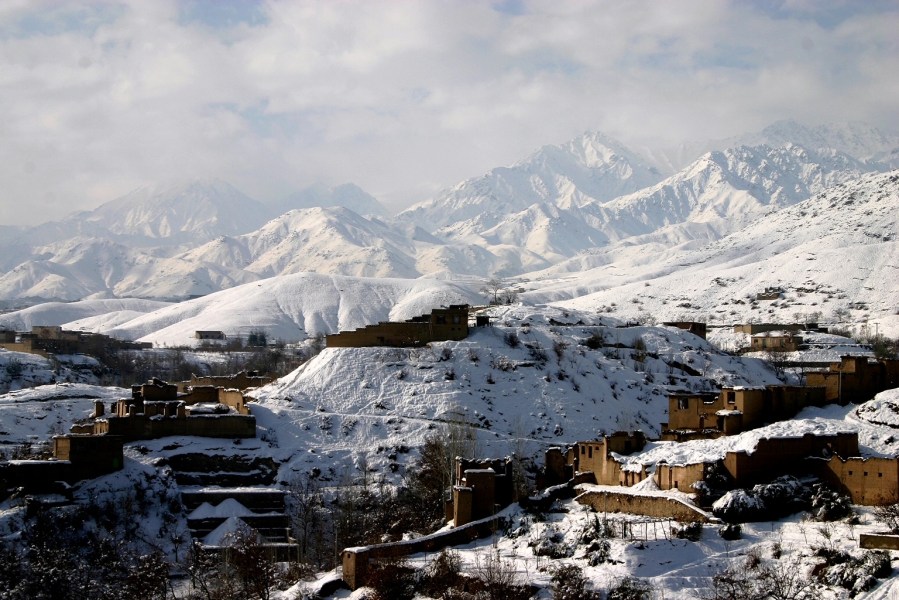
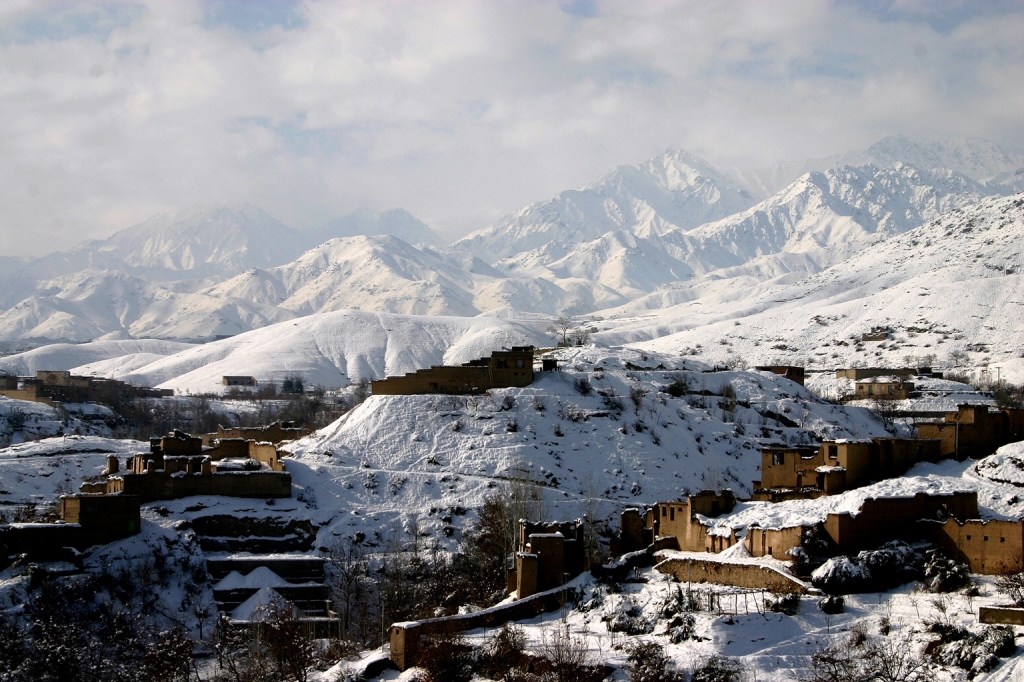
Winter in Istalif, Afghanistan, 2006
The first time I landed in Kabul, Afghanistan, was 2004, just after the Taliban had been ousted from the capital. The airport was barely open, freshly remodeled by bombs and bullets. We landed on a runway flanked on both sides by the wreckage of planes. Little grey donkeys pulled wooden luggage carts to the terminal. Large windows in that building faced the tarmac, but they contained no glass. But as each year went by and we returned to continue helping with humanitarian aid efforts, we saw more and more improvements come to Kabul. The airport got window glass, and mechanized belts for luggage and security, computer systems, and speakers for announcements.
The streets of Kabul changed too, from mainly rubble and falling down buildings, to large, chrome and glass high rise wedding halls and shopping centers with escalators. Broad avenues were repaired to accommodate all the traffic of Afghans returning home, ex-pats intent on helping to rebuild, and a coalition of military forces patrolling the streets of the city.
We spent our time helping with distributions at refugee camps, visiting medical clinics and hospitals with foreign doctors, and touring schools to teach lessons or encourage the staff with special luncheons. I could tell a thousand stories about any of this. But here is just one.
Each year I visited Afghanistan I made one stop consistently–Chicken Street. In 2004 this market area was a hodgepodge of dusty wares housed in shops that had somehow weathered the bombings of the city. I remember seeing so many strange things. Fur coats hung in one shop window along that street. They weren’t mink, or rabbit, but more exotic spotted and striped furs I couldn’t place—maybe animals from China, my translator thought. In another shop I bought slippers—palace shoes, my translator explained. They were Afghan red, embroidered with gold thread, and pointed at the toes, like something out of 1001 Arabian Nights.
Next, was an icon on Chicken Street—Rauf’s rug store. Business picked up here over the years, as well, and when I stepped inside in 2007, I was immediately surrounded by stacks of carpets, mostly Afghan red, piled high all along the walls of the store, and on the floors. They were hand woven, I learned, with the tightest warp and woof and the most intricate patterns.
Me, sitting on rugs at Rauf’s store in Kabul, circa 2007.
Rauf greeted my friend Wakil with the barrage of pleasantries customary in a country where so many layers of hospitality are interwoven in everyday interactions. The greetings were all in the Dari language, but I knew they were always begun with a wish for peace—Salaam. (It’s ironic that all over this land that is again embedded in violence, people are wishing for peace by just saying hello.)
Rauf asked after Wakil’s health, and Wakil reciprocated. Then, each man asked about the health of every other person connected to each of them—family and friends. (Just stopping by to say hello in Afghanistan can take a while.) And an Afghan would never come straight to the point and begin talking business before firmly reestablishing or establishing a relational connection.
Anyway, once the greetings were finished, we were urged to seat ourselves on the stacks of rugs and a tray of tea was brought out. Small glasses were filled with steaming drinks and a plate of biscuits (the British style, not the Tennessee style) and some candies in shiny foil wrappers came to accompany the tea. We sipped our tea politely, grateful to our hosts.
I sat in a headscarf I was constantly adjusting and made sure my legs were not too exposed. (I was wearing pants and a long dress.) It is a conservative culture, and I was many times teetering on the edge of a faux pas I am sure. My thoughts constantly rehearsed what I had been told: Women should avert their eyes from men. Greetings do not involve touching. Clothing should cover everything but hands, shoes, and the face—sometimes the hair can peek out from the top of the forehead if the scarf slips back, but it should be adjusted for modesty, no matter the situation.
At some point Rauf got the idea that I wanted to buy a rug that was not too big. He began commanding rug after rug to be brought out by black bearded shop men who snapped to obey and trotted into the guts of the store to hoist yet another carpet onto their shoulders. They dramatically unfurled the rug in the middle of the floor just below where I sat.
I felt guilty shopping this way, in this country, where the victims of war and oppression treated me like an honored guest. But it is their custom. And they are among the best hosts.
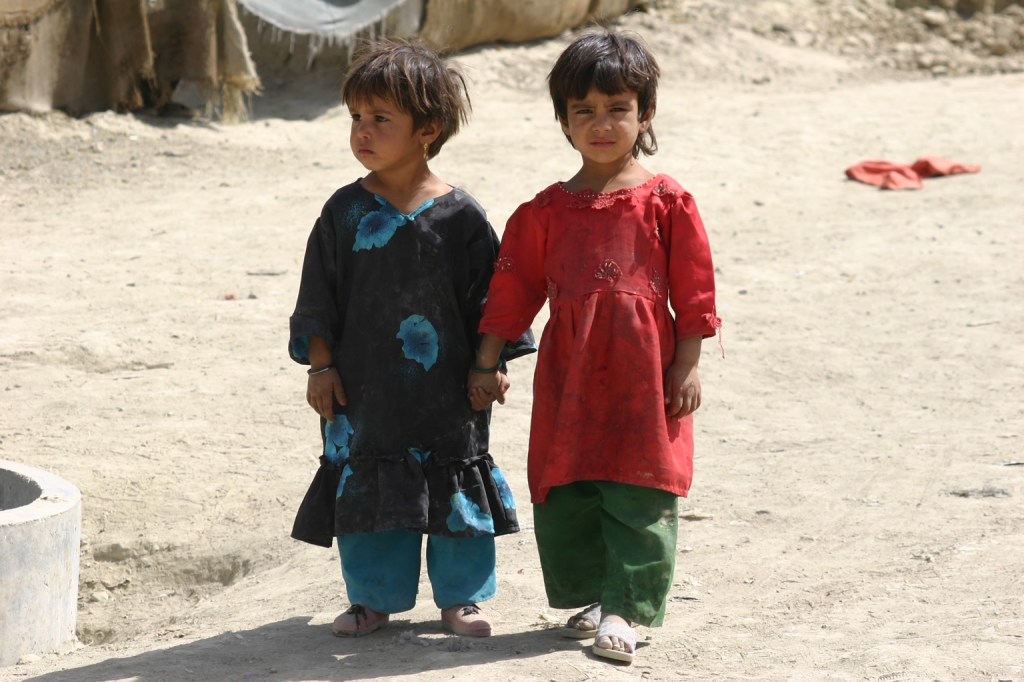
Afghan girls at a camp for displaced people in Kabul, 2004.
When I decided on a carpet, the yelling began. It was a ferocious bargaining in an even more wild sounding language. Wakil and Rauf had switched to their mother tongue—Pashto, a language my Pashto friend likens to nails being dropped in a bucket.
The noise of the arguing must have made my face wince. Wakil stopped for a moment and reassured me in an English aside, that he and Rauf were just playing a game and even though it sounded incredibly angry, it was just Pashto.
Still, there were likely threats of shame on Rauf’s family for selling a rug for more than it’s worth. And there were equally likely threats of shame for Wakil putting a poor rug dealer out of business.
In the end I came home with a modest-size Afghan rug, mostly black rather than red. I hope I paid a fair price. I’m sitting on it now as I sit in my office desk chair typing this. And whenever I step on it in this room, or vacuum it, or watch my daughter’s cat stretch out on it in the shaft of sunlight that comes through the office window, I think of Rauf, and of Wakil, and of all the Afghans I met over the past 20 years. I hope they can hold on again, like they did before. And I hope they have a rug, too, or at least one thing, one tea glass, one headscarf, or one shalwar kameez, to remind them of their place, and maybe better times that may yet come again.
Some days in Venice the slow pace of silver-haired retirees and the quiet beauty of historic architecture felt like a time capsule. We will miss the quaintness of this little city on Florida’s Gulf Coast. The center of town with its 1920s and ‘30s hotels, houses, and apartment buildings were all built by developers rightly convinced that someday Florida would be a prime vacation spot. Today, small shops built in Italianate style are juxtaposed against newer buildings, including a the Daquiri Deck with its icy air conditioning, and wall of swirling machines full of icy red and yellow grown-up Slurpees.
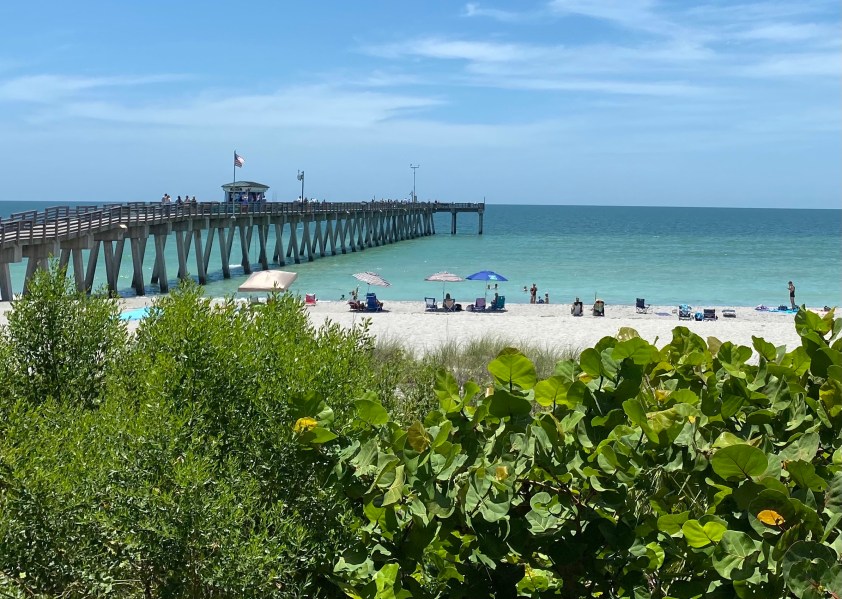
The Venice Pier and the beach as seen from Fins restaurant.
But the original plan is clear. And what impressive forethought Venice represents. It was just an idea—now nearly 100 years old, that has come to pass like a prophecy fulfilled in shady lanes and cobbled avenues. Palms, banyans, and oaks that drip with Spanish moss now dwarf passing cars, half-naked tourists, retirees, and families with children who walk along the old boulevards that once were just drawings on a page. And none of us would be as awed by the carefully curated beauty of this place had not someone thought to plant trees by which they would never be shaded.
Anoles of shifting colors flit across the sidewalks in this place. Birds flock to the beach; gulls, sandpipers, and the Brown Pelicans aloft on sea breezes like floating gangsters flying low with scruffy feathers ruffling out of place in the wind.
White and black ibis are ubiquitous in Venice, busy stabbing their foot-long orange beaks into the grass most mornings. Egrets and herons abounded as well, but none as friendly as the one I mentioned earlier, the Great Egret who arrived in three feet of white feathered regalia to the screened porch of our condo in Ft. Myers. We named him “Charlie” and he wasn’t shy. He would stand staring at us, a patch of green beside his yellow bill, and his remarkably long neck moving into an ‘S’ shape and then stretching out to its full length before he would tuck it up and fly away with no more apparent effort than a paper airplane.
A Blue Heron on the Caspersen Beach near Venice, Florida.
That was also the spot where we sighted a Roseate Spoonbill flying over a tennis court. It’s a big, pink bird, like a flamingo’s slightly weirder looking cousin. And since we never saw flamingos, except for the plastic ones staked in yards, this rosy species remains one of my favorites in the area.
We never saw an alligator, but gopher turtles were plentiful along the bike paths. And I will miss seeing them, as well as all the bicycling, golf carting, and walking we did together. I know I will miss the flats of the sandy soil in Florida. Hills there are usually boat bridges—and we will miss the views from atop those of sailboats, speedboats, trawlers, yachts, kayaks, paddleboards, and jet skis.
Sadly, I will also recall the fish that swished ashore breathless, as an algae bloom called red tide sucked the oxygen from the water and left them strewn rotting on the beaches of Siesta Key, Venice, and elsewhere.
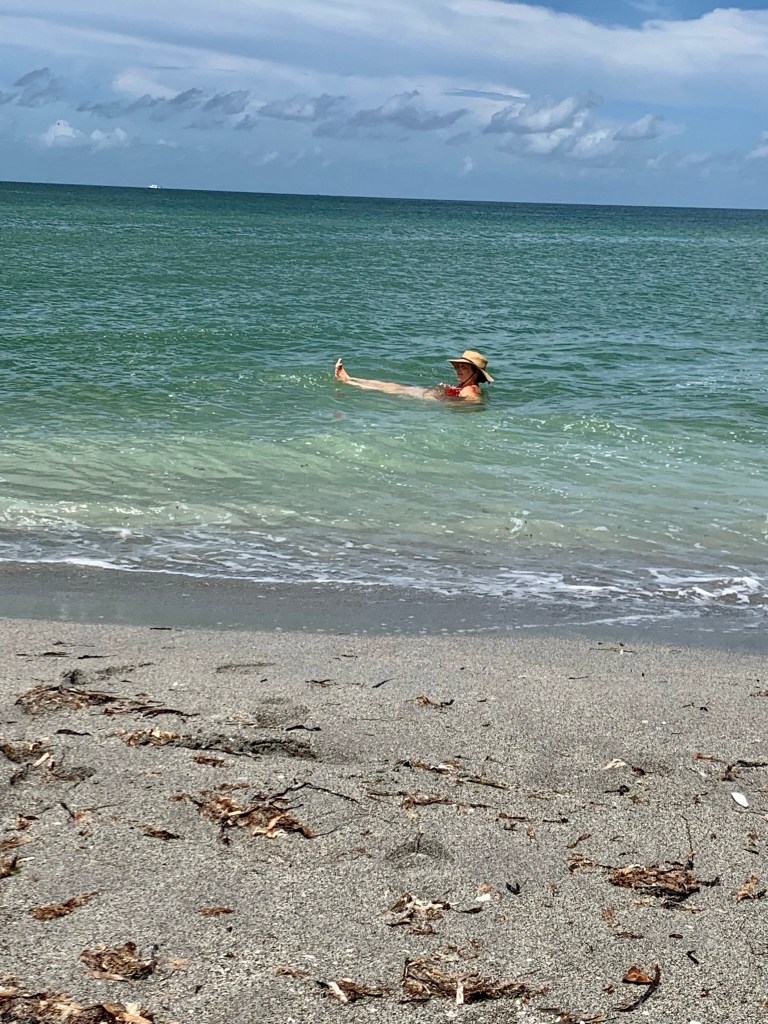
Rebecca floating in the Gulf. With the water temperature in the mid-80s we often dove in for a cool-off on our long beach walks.
Venice already pays attention to straws that disintegrate rather than becoming a problem in the ocean. They have dozens of sea turtle nests marked all along a shore lit only in red lights at night to help guide these creatures toward the sea. Figuring out the red tide is a priority.
Maybe the selfless vision of the beautiful plan for Venice, created so long ago, can continue to invigorate the people in Venice today, to sustain its attractiveness—both natural and created. I hope so.
I can still smell the water all around in intracoastal waterways, harbors, estuaries, beaches, and the thick scent of salt and seaweed. I will always remember the sensations of floating in the waves of the Gulf and at the same time seeing the dorsal fins of dolphins leaping just a few yards away from me. Amazing.
We went for brunch at the Cote France French restaurant in Venice, Florida, a few weeks ago and the waiter seemed to recognize us when we showed up again for a special wine pairing dinner this week.
“Good to see you again,” he said in his thick, French accent.
We haven’t met a lot of people here in Venice, but everyone is so friendly—even French people, passersby, and shopkeepers. They make this little town feel welcoming.
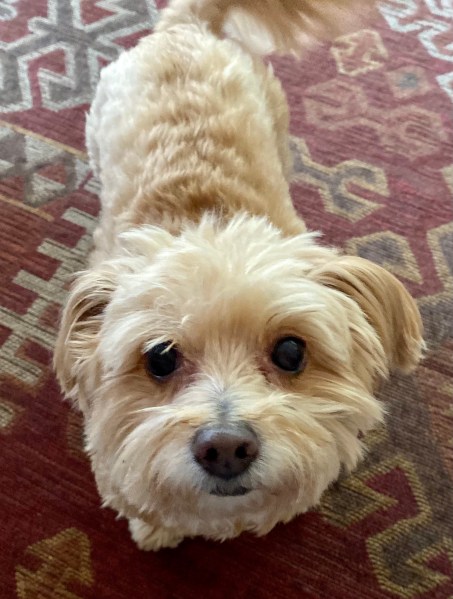
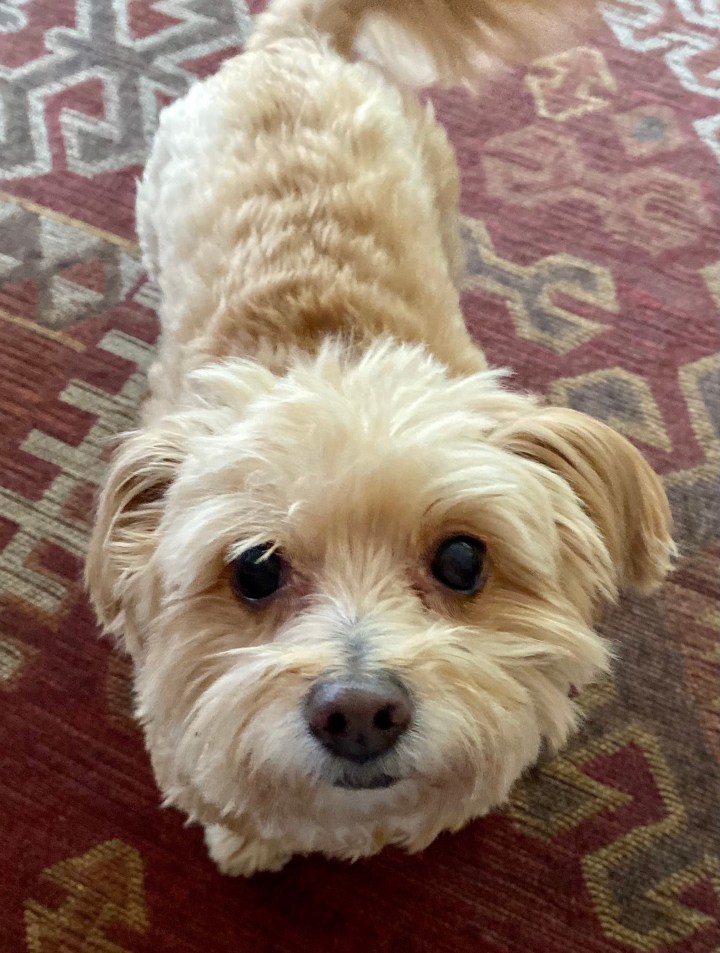
Murphy is a Havanese. I had a stuffed toy Havanese when I was a kid. It had a little FM radio in its belly and it came with a comb.
A week or more ago, a waitress at another local eatery was cheerfully telling us about a drink special and didn’t realize that the rum she was describing was my favorite. We toured the distillery in Key West when we were there in 2019. It’s a rum named for Ernest Hemingway’s fishing boat, which was in turn named for his second wife—Pilar. Turns out the waitress had also toured the rum distillery. I’m not sure if she’s ever read any Hemingway, but I felt connected, nonetheless.
“In order to write about life, first you must live it.”
Ernest Hemingway
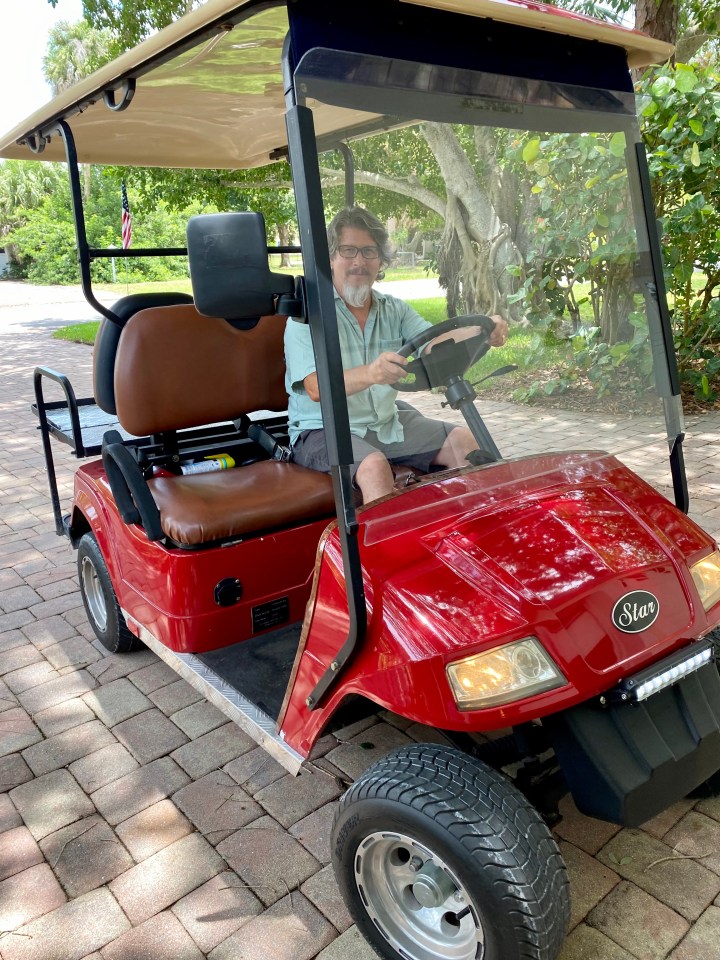
Along with our feet and two bicycles, we are lucky enough to have this golf cart to get around the island of Venice.
Shopkeepers also seem genuinely glad to see us as customers. We met a woman who studied art in Paris and now runs a gallery gift shop here. Behind red-rimmed glasses and brown hair pulled back, she gladly told us her story. A checkout girl at the grocery store told us about her recent retake of the ACT and how nervous she was about getting a high score. I asked her if she had taken a prep course and from behind her face mask, she said she had, so I assured her that she would get a better score this time. For a moment, I felt like a teacher again. And for a moment, we were strangers caring about each other, sharing a town small enough, full of enough older people, or maybe Southern enough, to slow down a minute and listen.
Following a pandemic year, all these things can no longer be taken for granted. Following a year that seemed to have torn the country in half politically, friendliness seems to have been placed on the endangered species list in some places. So now, eating at restaurants, shopping, teaching moments, connections with strangers, feel novel again. And for me, these are moments that are filled with gratitude. I missed people. And the kindness of strangers.
We can always find a piece of the beach that we have all to ourselves. And with a summer temperature in the mid-80s the water in the Gulf is perfect for a dip.
One final person in Venice to mention, as we are on the topic of people. Today we went over to visit our new friend C. again. She is 90 years old, maybe 91, and enjoys a good conversation and her little dog, Murphy, who is currently in our care. He spins in circles and jumps around whenever we say we’re going to visit. He likes visits, walks, rides in the golfcart with his furry ears flapping in the breeze. He also likes squirming to try to jump out, and randomly issuing a bark so high pitched it makes me want to jump out. Instead, I tighten my grip on his little red harness and Ron zooms along.
Our friend’s face lit up when she saw Murphy. Then, we chatted about everything from National Geographic television programs, to how people don’t have phone books anymore, to her wicker rocking chair, as Murphy sat in her lap and then licked her shoes. Then he pranced around again excited to end our visit and get back in the golf cart.
“He seems to really like you,” C. said. “So that’s good.”
“We like him, too,” I said.
He likes Ron the best; insists on sitting in the purple chair in the living room with him. He sleeps in our bed. He wags excitedly when we come home from outings.
“We’re just at the forefront of our housesitting career,” Ron says. So, there may be more dogs, cats, or miniature horses. (I hope.) We may make more acquaintances, or friends. We may visit more places that may become as familiar to us as Venice has. (I hope.) Beautiful beaches, cool sea breezes on hot summer days, long walks on avenues shaded with historic trees hanging with Spanish moss, historic homes roofed in red clay tiles and infused with Mediterranean style, and friendly, smiling faces all around.
One of the historic, tree-lined avenues in Venice, Florida, planned nearly a century ago in a beautifully designed city envisioned by a man named John Nolen.
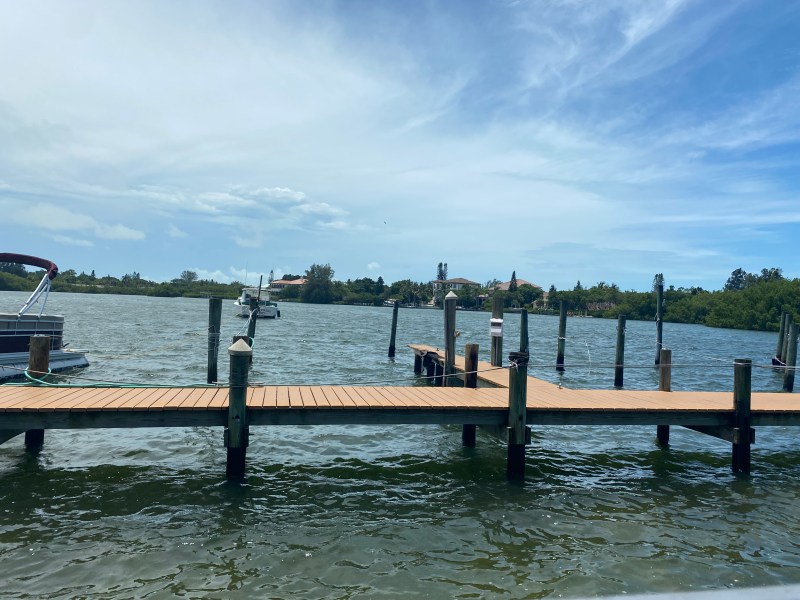
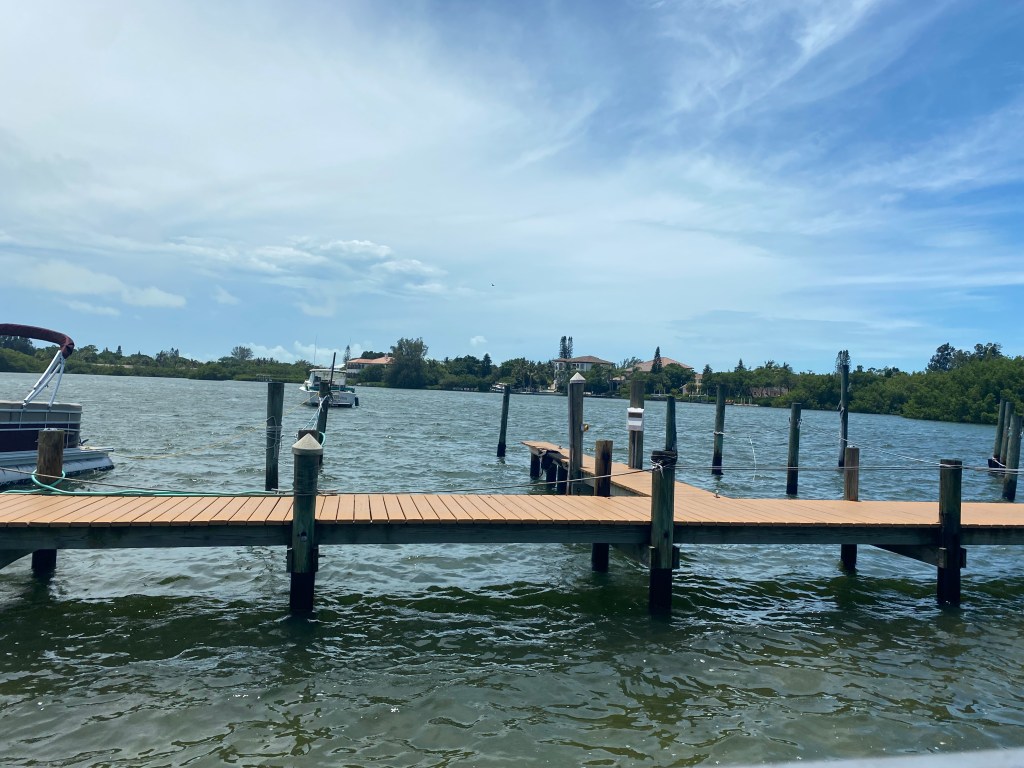
The view from our lunch table on Little Sarasota Bay beside Casey Key.
Like a rusting bicycle chain or a damp dollar bill, the Florida weather has begun to alter parts of me that I thought were well fixed. We made it through Hurricane Elsa, which downgraded to a tropical storm for our area. Seeing that through made us feel like actual Floridians who know what to do with weather forecasts—wait and see.
And now that we’ve been here a month, and we are wearing suntanned skin and a permanent glisten from sweat, I’ve noticed that my previously Colorado-winterized body (and mindset) has totally adapted to tropical heat.
First of all, coffee. I like strong, hot coffee with milk. I’ve been drinking coffee that way every morning since I was in college. So, the fact that I am now drinking iced coffee with both milk and sugar is a testament to the radical, albeit subtle shift, Florida has made on my constitution.
I no longer have any fear that I will ever be cold under any circumstance any day or night. It takes exactly 30 seconds of being outdoors before I begin to seep. Socks and shoes seem as torturous as church clothes for Huck Finn, and have become obsolete, at least for me. I can’t even recall the concept of pants. Even shorts made of heavier material than linen or cotton are questionable. Most often I slip on a loose, sleeveless dress, a broad-brimmed sun hat, and hope for shade, water, and breezes.
Yesterday, we went for a 15-mile bike ride north to a place called Casey Key. We had hats for shade, and a fairly consistent cool sea wind left over from the storm. We stopped for lunch on the water of Little Sarasota Bay. I ordered iced tea—another beverage I seldom drink. I sucked the first one down like a Bedouin at a desert oasis, but let the second glass sit too long as I ate and by the time I went for a second sip all the ice had melted. Timing was important, as the little plastic cups the restaurant had were not insulators. Around the house we’ve discovered the wonders and obvious necessity of double-walled plastic tumblers that keep our iced drinks cold for hours. Drinks contained in anything else are soon tepid and a drippy mess of condensation. And I own none of these miraculous containers in Colorado.
When we got back from our long ride, I took a nice cool shower. Who is this creature I’ve become? Normally, I take hot showers—scalding if I can get them. Living here now, I have never even bothered to figure out how to make the water hot.
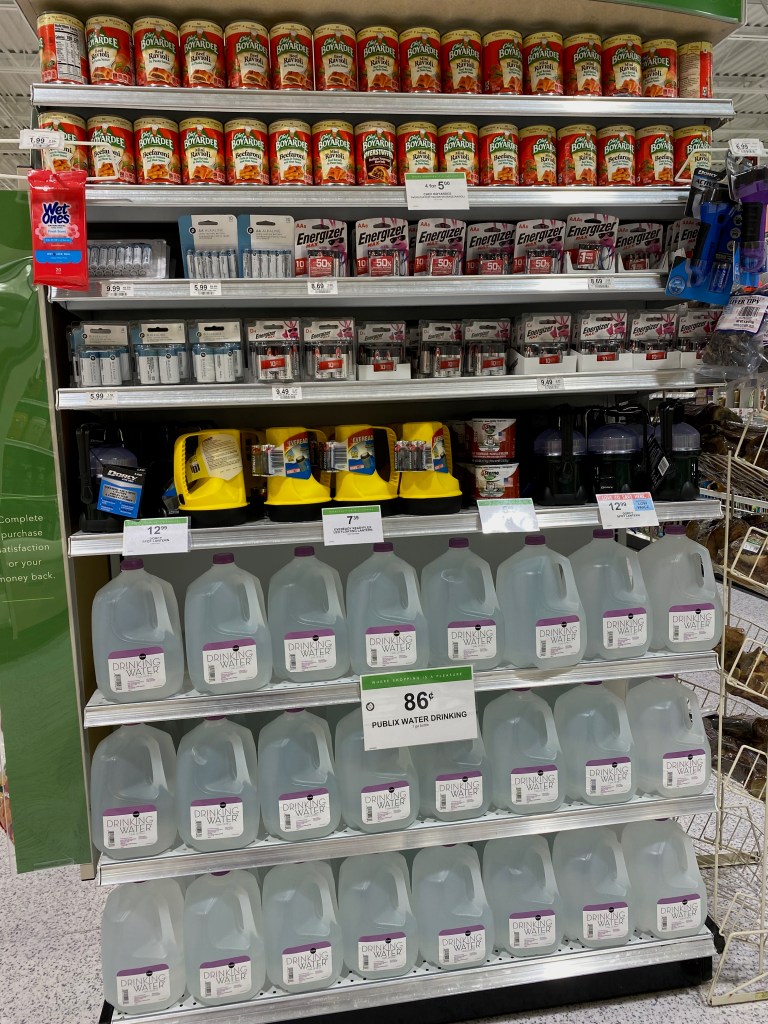
Hurricane prep at the grocery store.
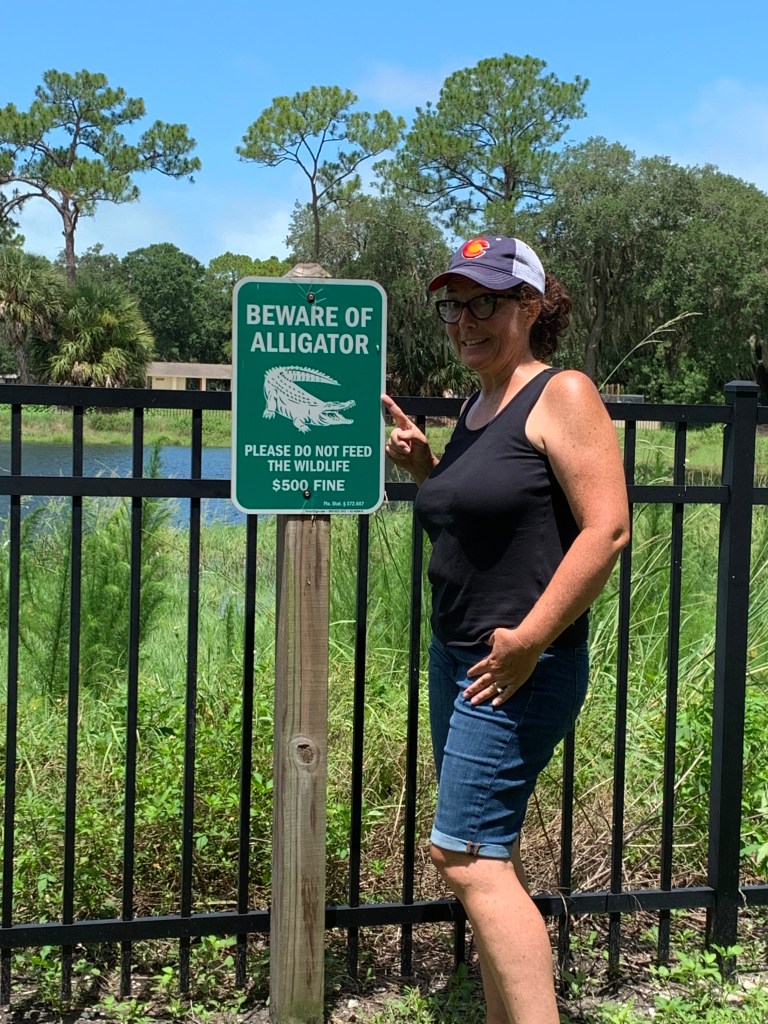
Refreshed and relaxed then I filled a blender with ice and made a frozen concoction that helped me hang on. We are literally living out a Jimmy Buffet lyric. I braved a brain freeze and reveled in amazement at air conditioning and fans. We have never even had air conditioning in our current house in Colorado. There are a few days in late July and August where we regret that. But for the most part the cool nights, open windows, and attic and swamp fans keep us from sweating through our clothes. Here we expect to sweat through our clothes regularly, if we venture outside, which we must. We want to take note of everything here that we don’t have in Colorado: anoles skittering along the bike path, sea birds, jacaranda trees, and the ever-elusive alligator. Still hunting for that.












 R&R Travels