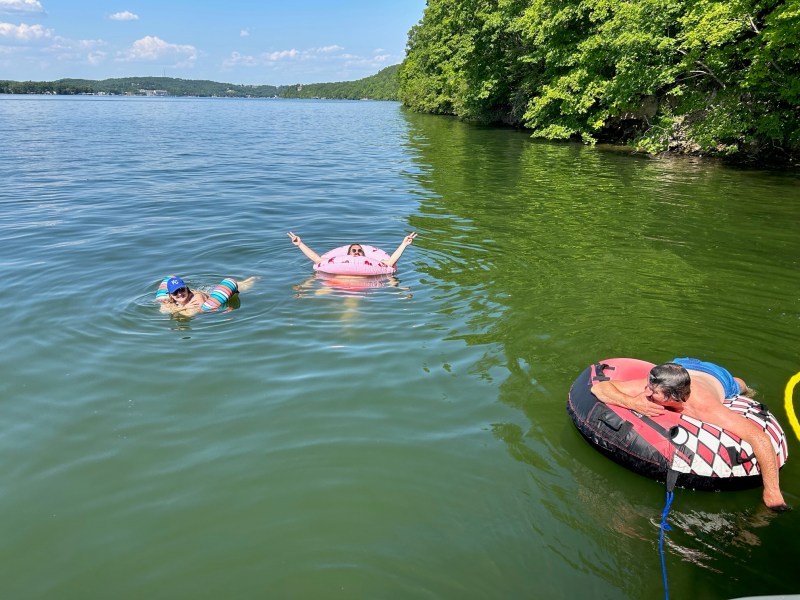
In June we awoke to chirping Carolina Chickadees in the towering old elms and pines that surround a kitschy cabin with a view of the Lake of the Ozarks. The brown wood house has been a vacation spot far a midwestern family for years. It sits on a quiet bay of the great lake, where boats putter by to their docks, where turtles sun on logs, and where herons stand gazing out at the water like bird philosophers.
We had said yes to old friends, who know the cabin’s family, and invited us by extension, for a welcome diversion from our suburban life. Ron fished. I wrote. We hung out near Sunset Beach with our people.
The Ozarks are a place neither of us had ever been. The lake is manmade, like Lake Powell, people having decided in 1929 to dam up one end of the Osage River and see how many valleys and towns would be swallowed up to form a massive, deep-water lake with few shores. If Lake Powell is a bathtub, its sides ringed with the rising and evaporating water lines, the Lake of the Ozarks is a giant’s hands cupped full of water for a drink. Steep hills thick with trees line the sides of the water that spreads out over several channels, dragon like across the middle of Missouri.
The weather was cooler than we had anticipated, and we enjoyed many a night with the windows open to the fresh air. We hiked to a castle ruin in Ha Ha Tonka State Park a couple of days and enjoyed our time in the woods despite the ticks.

The story of the castle isn’t much different than Jane Eyre if you add a bit of imagination. A wealthy Kansas City businessman (Read: Mr. Rochester) conceived of building a Scottish style castle for his family in 1905. He even brought in Scotch masons and constructed a mule cart track to pull rock from a nearby quarry. But just a year after beginning the massive project that included gardens and carriage houses, the man was killed in a car accident—a relatively new way to die at the time. (Also, this is more Great Gatsby than Jane Eyre.) His sons finally finished the castle some 16 years later and used it for a summer home in the 1920s. I imagine a plethora of Gatsby-esque fetes in those halls. It was let out as a hotel in the 1930s, where I presume many Agatha Christie mysteries were hatched. Then, in 1942, the roof caught fire from a chimney and the whole thing burned down. And we are back to the Jane Eyre narrative. (Read: Bertha burning Thornfield to a charred ruin.)
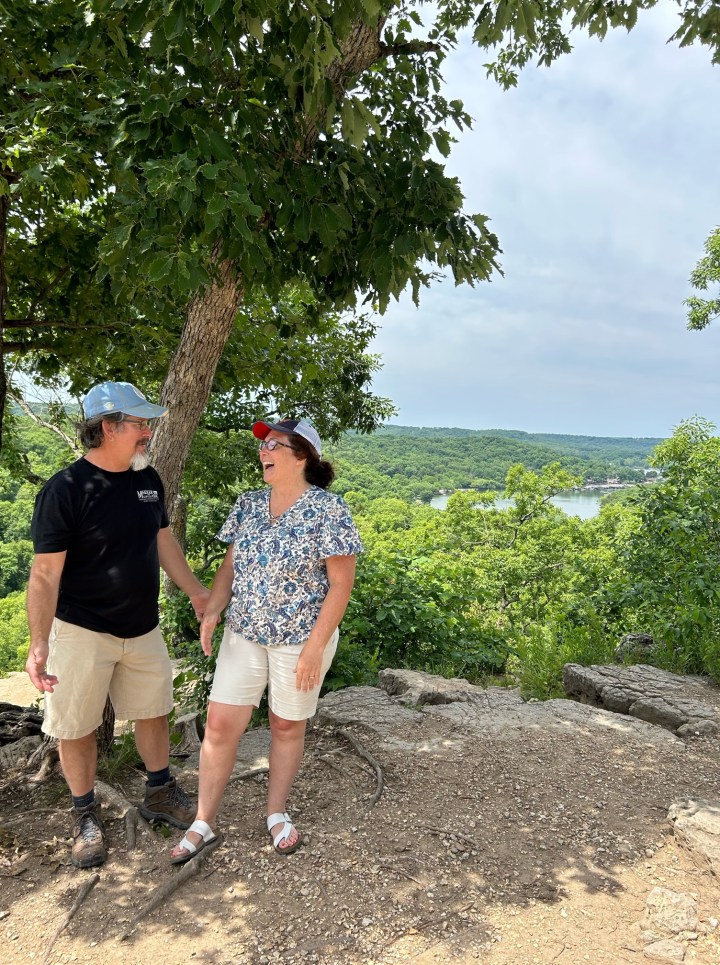
The stone walls that remain are high atop one of the rock cliffs overlooking the lake. The view was a delight at the end of our hike—though you can drive to the top as well. You can also hike down and around a spring, hitch a ride with a friendly boater, and climb back up by the quarry. (You know who you are.) Though I recommend padding along the planked path that winds up the side of the cliff to the castle.
The draw for me was the evident history of the place. While most of the Ozarks has more of a convenience mart, fudge and saltwater taffy, gas and groceries vibe, the castle shows the vision of a man who saw this same land more than a hundred years ago, even before the lake was put in. And even before that, the plentiful small deer, squirrels, catfish, smallmouth and largemouth bass, turkeys, and armadillos, as well as the black walnut and plum trees, gave us a good idea of what the Osage and half a dozen other tribes of Indians ate when they spent time in this place 200 years ago.
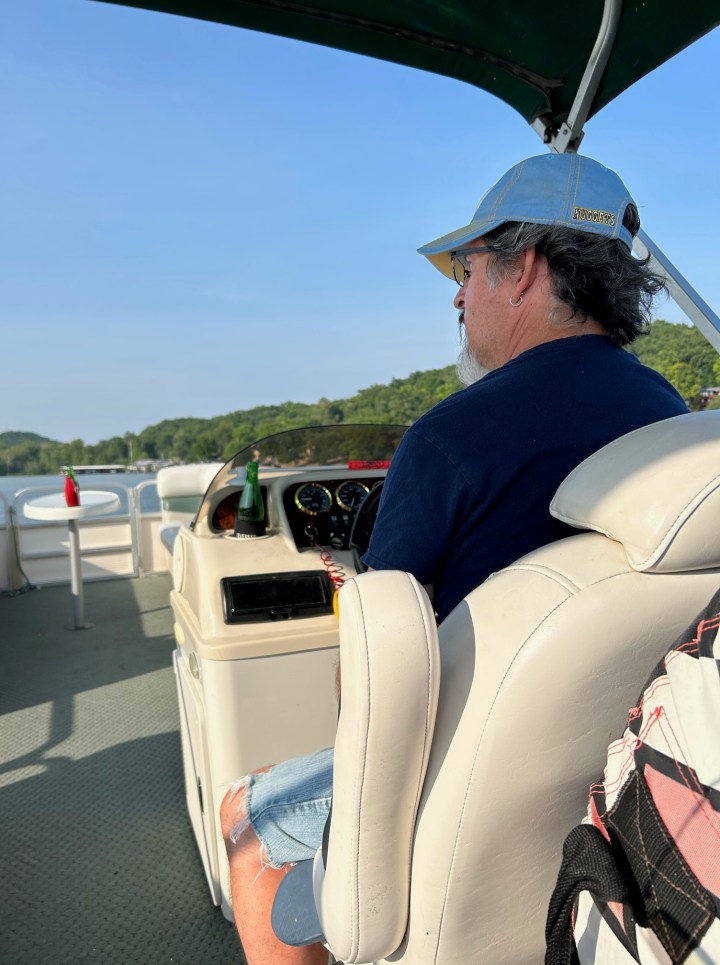
We ate much more fatty options, in abeyance to the culture of today’s Ozarkians, who eat Lambert’s Café throwed rolls and fried okra, along with sugary macaroni with tomatoes, and cornbread with sorghum (my first taste of that syrupy sweetness). We also devoured towering plates of nachos, shrimp pizza, and fried catfish at the local bar and grills where Ron perfected his boat docking skills while curious lake lubbers looked on. Water challenge met; this mountain man decided he liked piloting a boat. Might want to do it again sometime. I said I would gladly ride along to get ice, dine out, or read a book while he fished.
 R&R Travels